

 Facebook
 X
X
 Pinterest
 Copy Link
The Colonel’s House
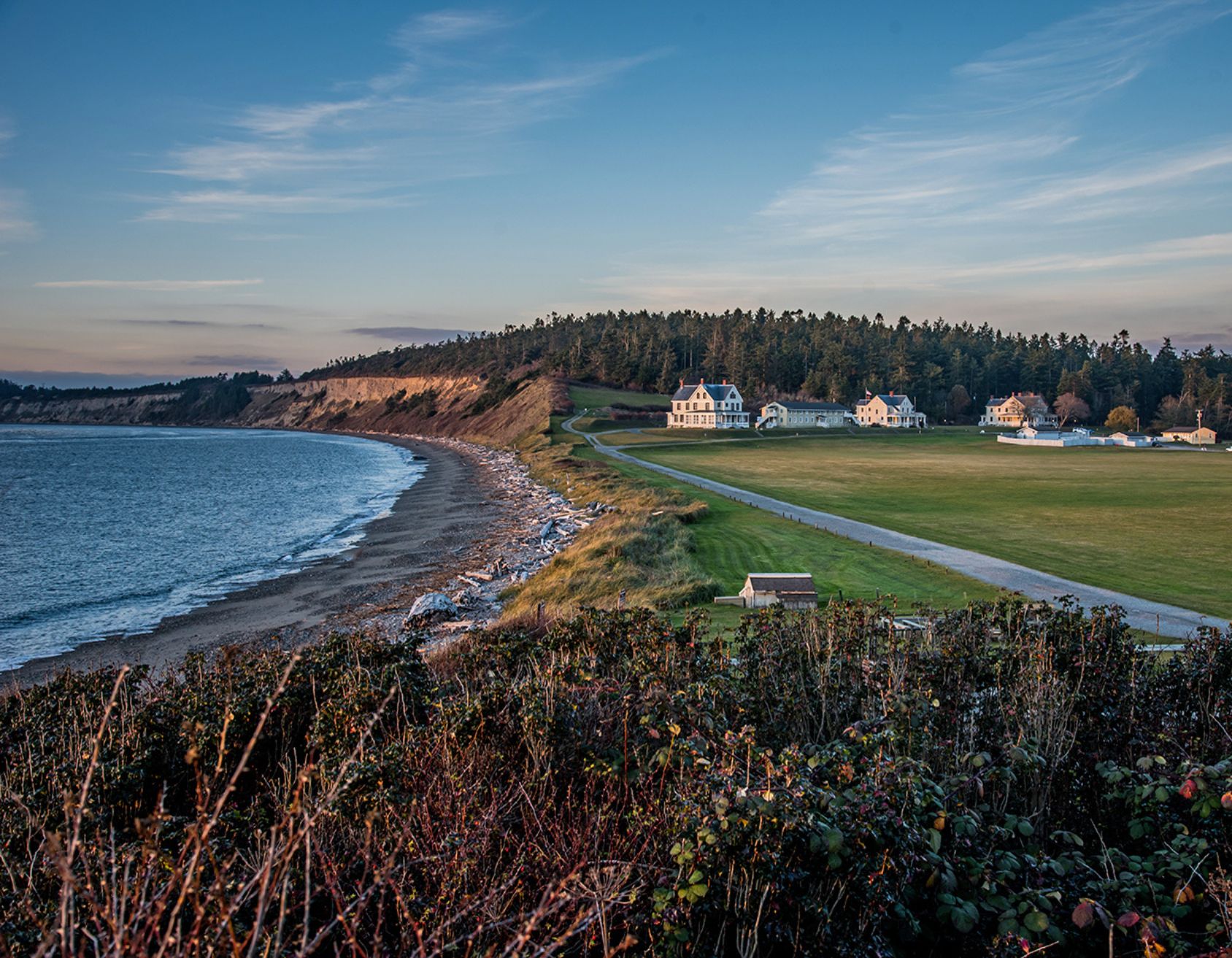
In a word, The Colonel’s House is imposing. Not in a scary way, but in a “yes sir, right away sir” kind of way. Once the commanding officer’s quarters at Fort Casey, this grand 1904 home stands with the quiet authority of a place that’s seen things yet still manages to keep its porch pristine.
The Colonel’s House Today
These days, the Colonel’s House has traded its military roots for a softer kind of mission. Today, it is part of Seattle Pacific University’s Camp Casey Conference Center. The Colonel’s House hosts families, couples, and groups looking to reconnect and recharge. The home blends historical elegance with modern comfort. Much of the original charm remains, from creaky stairs to the sun porch that guests never want to leave. But don’t worry, the kitchen’s fully updated for all your pancake-flipping needs.
From its perch above the old parade grounds, the view is nothing short of breathtaking. You can see straight across Admiralty Inlet, where the Strait of Juan de Fuca meets Puget Sound. It’s the kind of view that makes you stop, breathe a little deeper, and wonder how you got so lucky to be standing there. If you’re quiet, you might just hear echoes of the past carried on the breeze.
Outside Adventure Calls
Beach strolls, forest trails, whale sightings, bald eagles, and sunsets that stop you in your tracks are all part of the experience at The Colonel’s House. While you’re visiting, be sure to explore the nearby town of Coupeville. You can spend your day taking beautiful pictures at the Wharf, grabbing a bite at Toby’s Tavern (famous for its mussels), enjoying fresh pastries at Little Red Hen Bakery, or shopping for handmade goods at Kingfisher Bookstore and Lavender Wind. It’s small-town charm at its finest. Better yet, it’s all just minutes away.
Whether you’re here for the history, the view, or just some well-earned rest, the Colonel’s House has a way of making you feel like you belong, right in the heart of its story.
Ready to call Whidbey home? Let’s Connect!
Photo By: Cynthia Woerner Photography
The Ferry House at Ebey’s Landing
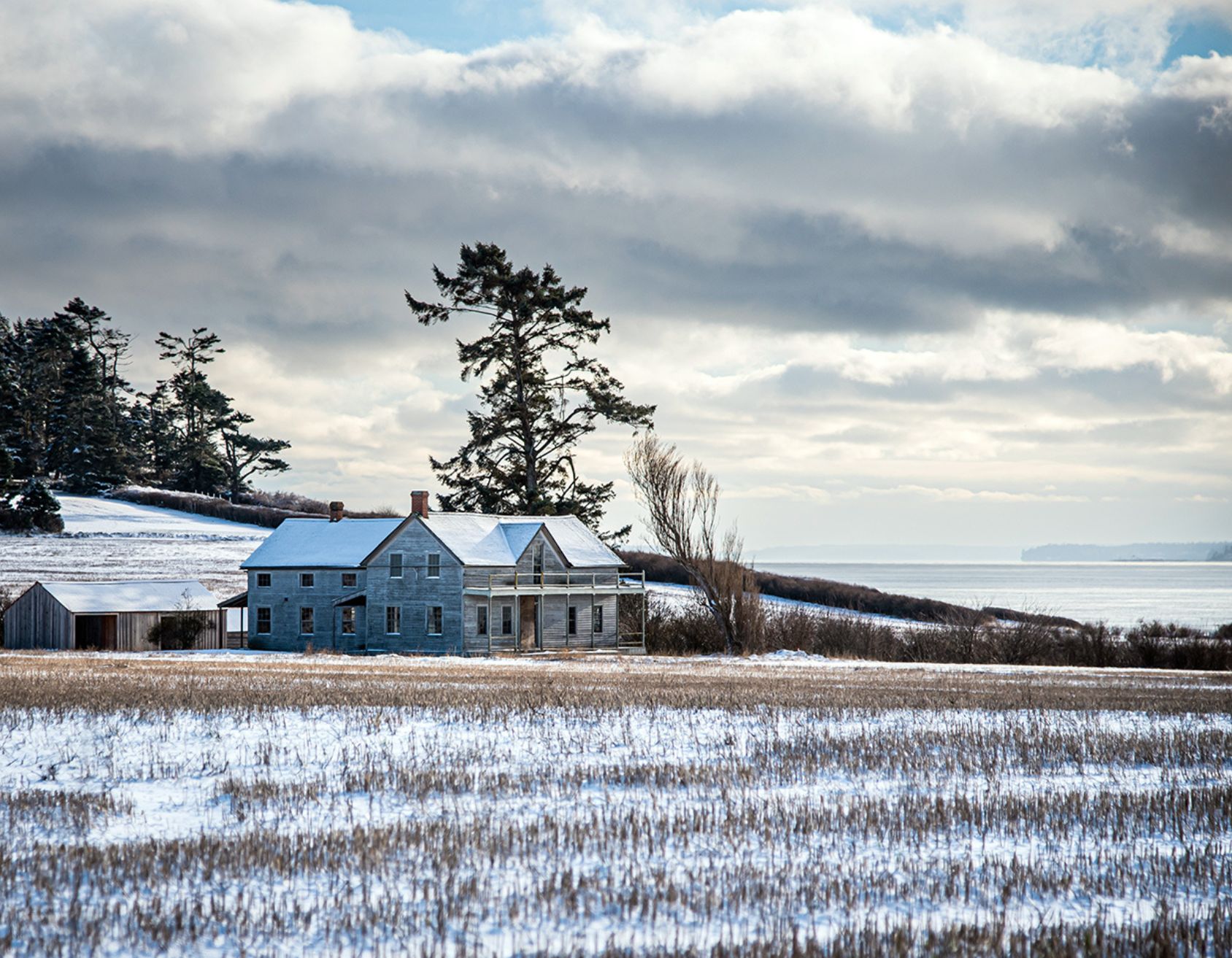
If Whidbey Island had a heartbeat, it would echo across the open prairie at Ebey’s Landing. Few places capture that steady rhythm quite like the Ferry House. This enduring landmark reflects the island’s history, character, and quiet sense of place. Whidbey’s story lives on through the Ferry House at Ebey’s Landing.
The Ferry House at Ebey’s Landing History
Built in the early 1860s atop the Ebey family’s original 640-acre land claim, the Ferry House sits high above Puget Sound, overlooking Ebey Prairie and the waters that have long connected Whidbey Island to the mainland. Long before “water views” or “heritage homes” became real estate buzzwords, this home served a practical and welcoming purpose. Travelers arriving by boat found warmth, rest, and a sense of arrival here. It was the first impression of Whidbey that was as gracious then, as it feels today.
The Ferry House at Ebey’s Landing Today
What makes the Ferry House especially compelling is how beautifully intact it remains. The home stands not only as a preserved structure, but as a living reminder that some properties are more than addresses. They are storytellers! They have borne witness to generations of change while remaining deeply rooted in their surroundings. In a world where newness often takes center stage, the Ferry House represents the enduring value of authenticity.
Magic of The Ferry House at Ebey’s Landing
In winter, the property takes on an added layer of magic. A light snowfall softens the prairie grasses, the roofline gathers a quiet dusting of white, and ferries move almost silently across the sound below. It’s peaceful and grounding, a scene that feels both cinematic and deeply familiar. Moments like this capture what so many are seeking today: calm, connection, and a lifestyle that elevates everyday life.
The Community
This is the essence of Ebey’s Landing and the surrounding communities. Protected open space, unobstructed views, and a commitment to preservation define the landscape. Here, history isn’t confined to just commemoration plaques or museums, it’s woven into daily life. Morning walks trace the same paths settlers once traveled. Seasonal changes unfold across the same horizons that have framed the island for more than a century.
Homes near Ebey’s Landing offer something increasingly rare. Beyond square footage, finishes, or amenities, they provide a connection…to the land, to the water, and to a story that continues to evolve. Living here means sharing space with history while enjoying the comforts and rhythms of modern island life.
In that sense, the true luxury of Whidbey Island isn’t found in excess, but in meaning. It’s found in places like the Ferry House, where past and present coexist, and where home is defined not just by walls and views, but by the life that unfolds around them.
If you have experienced the magic of the Ferry House at Ebey’s Landing and wish to make a move to Whidbey to enjoy the experience all year long, lets connect!
Photo taken by: Cynthia Woerner Photography
Bunkers Overlook – A Legacy
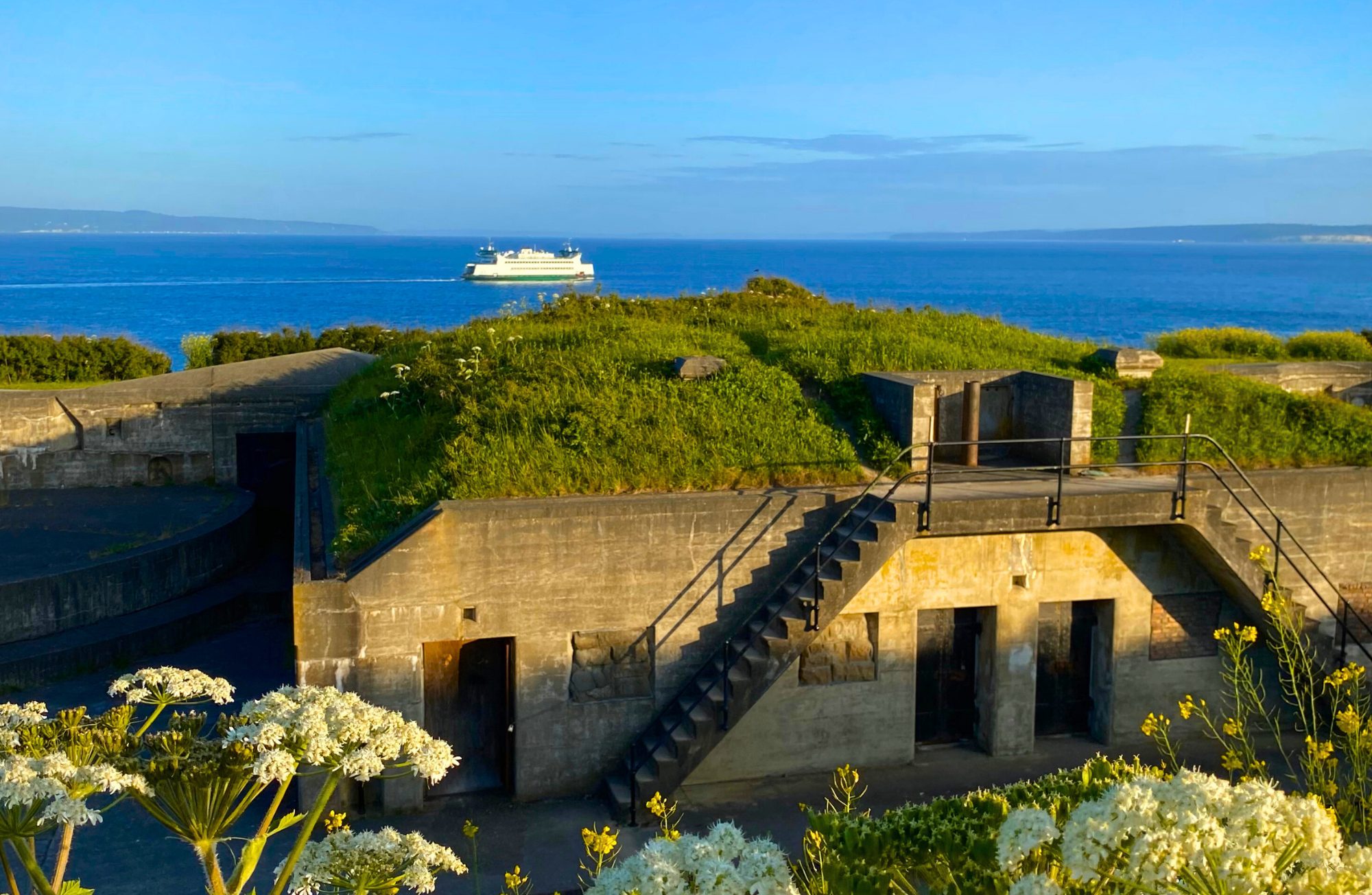
The Fort Casey bunkers located in Coupeville sit perched atop the cliffs overlooking Admiralty Inlet. They stand as silent sentinels of the past, remnants of a bygone era when coastal defense was paramount. These imposing structures were originally built during World War I for coastal defense. They were designed to house artillery and troops and served as a strategic vantage point to protect the Puget Sound & PNW coast. Today, they offer a unique historical attraction for visitors. As you explore the bunkers, you may also catch a glimpse of Washington State Ferries gliding gracefully through the shimmering waters of Puget Sound, a reminder of the region’s maritime legacy and its enduring connection to the sea.
Photo taken by: @PNWBirdie
Check out the rest of Whidbey’s beautiful destinations from this series here.

Traffic Comes in Waves
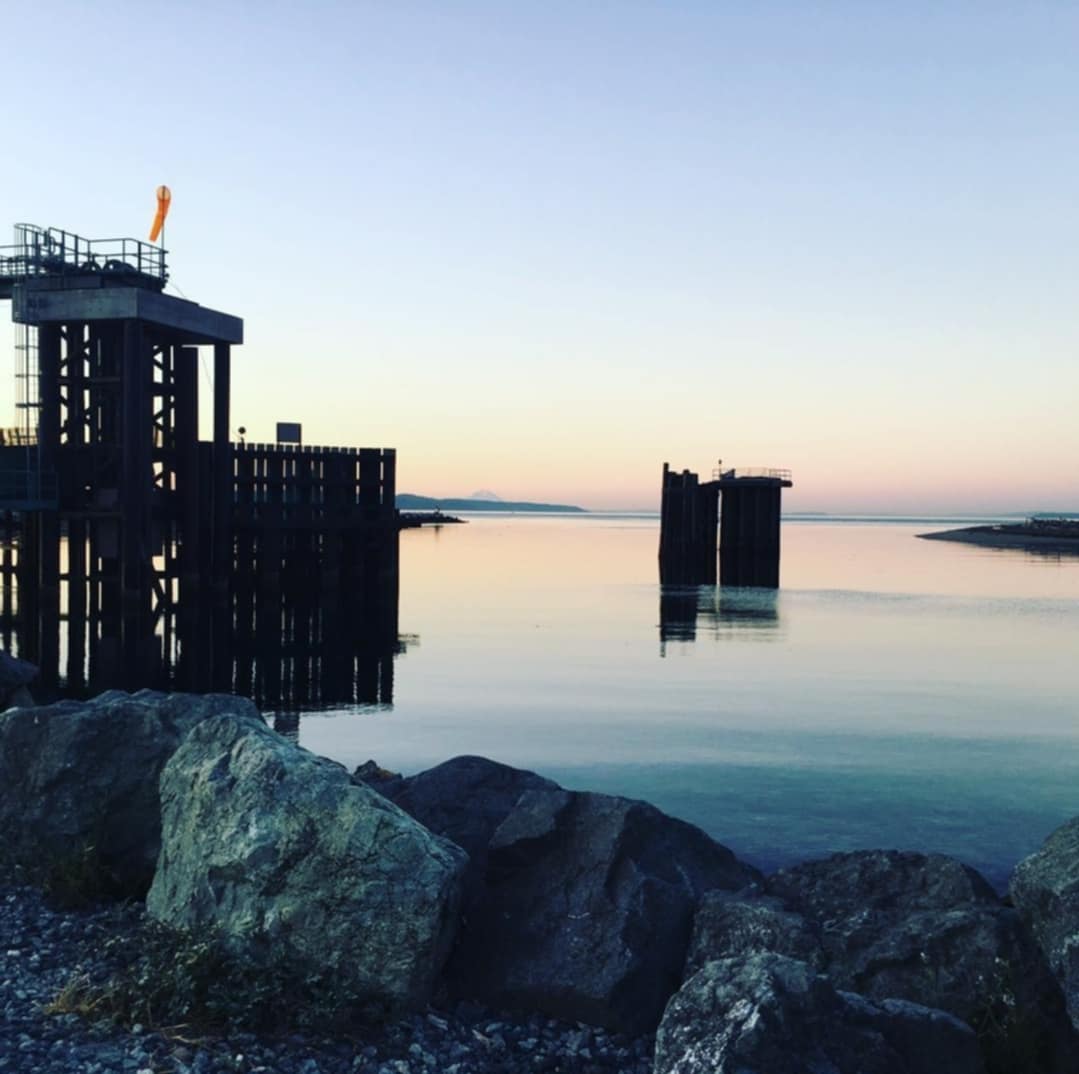
Traffic Comes in Waves: Navigating Coupeville’s Ferry Flow
If you have spent any amount of time in Coupeville, it is likely you have experienced a unique traffic pattern. There are periods of quiet, followed by sudden surges of cars flooding the streets. This phenomenon is affectionately referred to as “traffic coming in waves,” and it’s all thanks to the rhythm of the Coupeville-Port Townsend ferry.
The Ferry Effect
The Coupeville Ferry Terminal is one of the main gateways to and from Whidbey Island. The ferry connects visitors and residents to Port Townsend. Multiple ferry crossings occur every day making traffic volume on Coupeville’s streets feel like ebbs and flows, much like the tide.
When a ferry docks, you see a rush of cars making their way off the boat. Whether their destination is scenic Deception Pass, a cozy bed and breakfast, or a stop for lunch in downtown Coupeville varies, but for locals, this predictable wave of cars has become a familiar part of life.
Timing Your Trips
If you live in Coupeville, or are planning a day of errands it is helpful to know and consider the ferry schedule. Typically, you will notice heavier traffic around the times a ferry arrives—especially during peak travel seasons in summer or on holiday weekends.
To avoid getting caught in the wave, consider planning your trips during the lull between ferry arrivals. The good news is, after the initial rush of cars from the ferry, Coupeville’s streets quickly settle back into their usual peaceful pace.
A Silver Lining for Local Businesses
For local businesses, these waves of traffic are often a welcomed sight. Shops, cafes, and restaurants see a noticeable boost in customers when a ferry unloads, as visitors often make Coupeville their first stop after arriving on the island. Whether it’s someone grabbing an ice cream cone from Kapaw’s or browsing the shelves of Kingfisher Bookstore, these waves of visitors contribute to the vibrant local economy.
Embracing the Flow
Rather than seeing the ferry traffic as a disruption, many locals have come to appreciate it as part of Coupeville’s charm. It’s a reminder of how connected the island is to the greater region and how many people travel just to experience the magic of Whidbey Island.
So next time you see a wave of cars rolling through Coupeville, take a deep breath and remember—it’s just another tide rolling in, bringing a fresh flow of visitors eager to experience the beauty and hospitality of Whidbey Island.
And if you’re a visitor reading this—slow down, take your time, and enjoy Coupeville. The ferry might run on a schedule, but island time always moves a little slower. If Island life seems more your style, consider staying a while. Connect with us, your dream home is just around the corner.
Fort Casey Forts
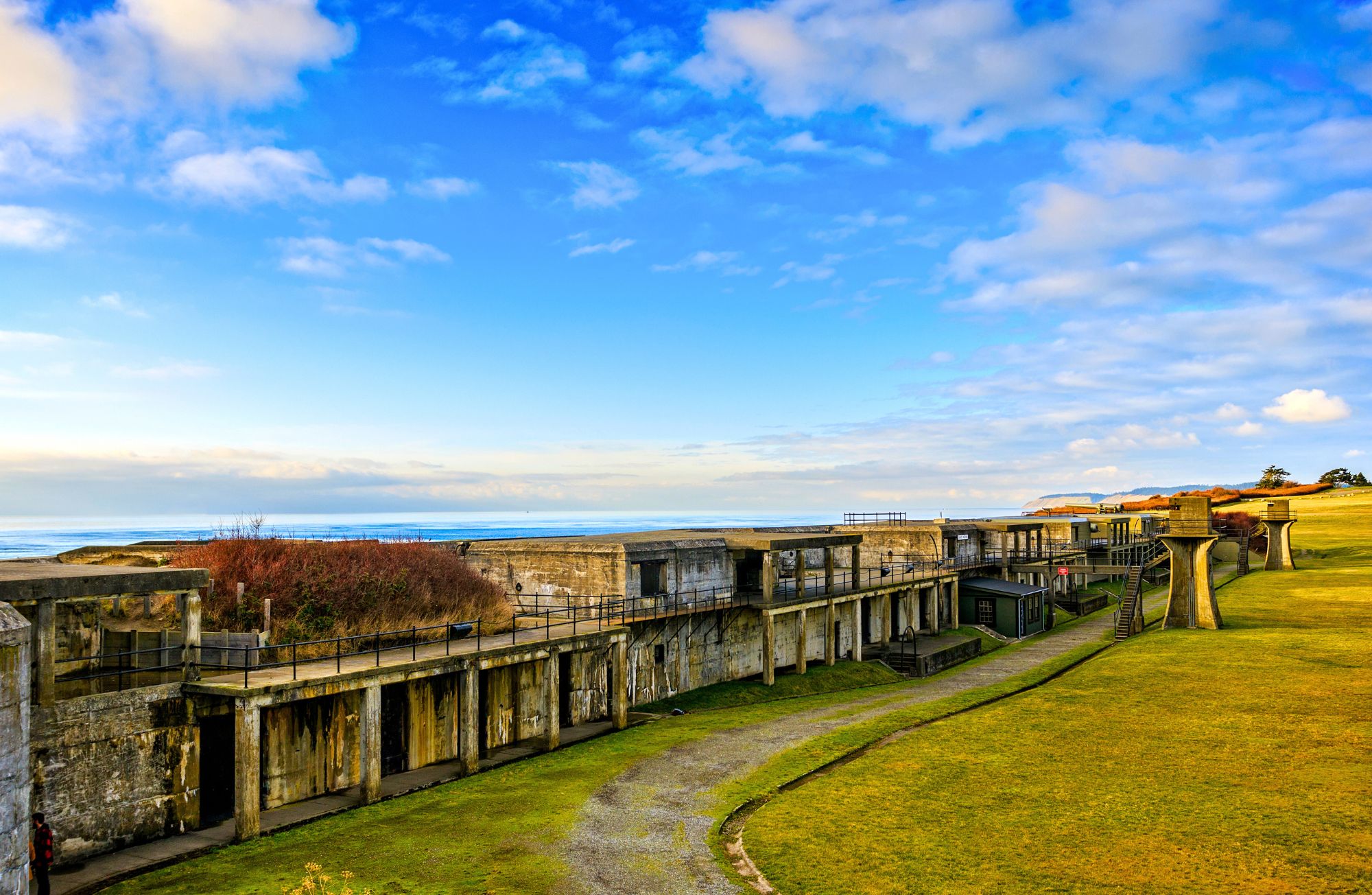
The coast artillery post displays of Fort Casey State Park includes four inactive historic guns atop bunkers, dark tunnels underneath and control towers to climb. It creates an opportunity for both historical education and exploration. One of three forts built in the 1890’s, Fort Casey is part of the “Triangle of fire” safeguarding the entrance to Puget Sound. Now, over 100 years old, the Battery Moore section has recently been restored to keep it safe to explore for future generations. It will look different in person than in the older photo on the front of this card. Take this to compare when you visit! If you are just visiting and find yourself falling in love with Whidbey Island and wishing to tour homes while your here, or wish to learn more about Whidbey Island connect with us.
Check out the rest of Whidbey’s beautiful destinations from this series here.
Visit Fort Casey
Navigating Paradise: On a Ferry Ride
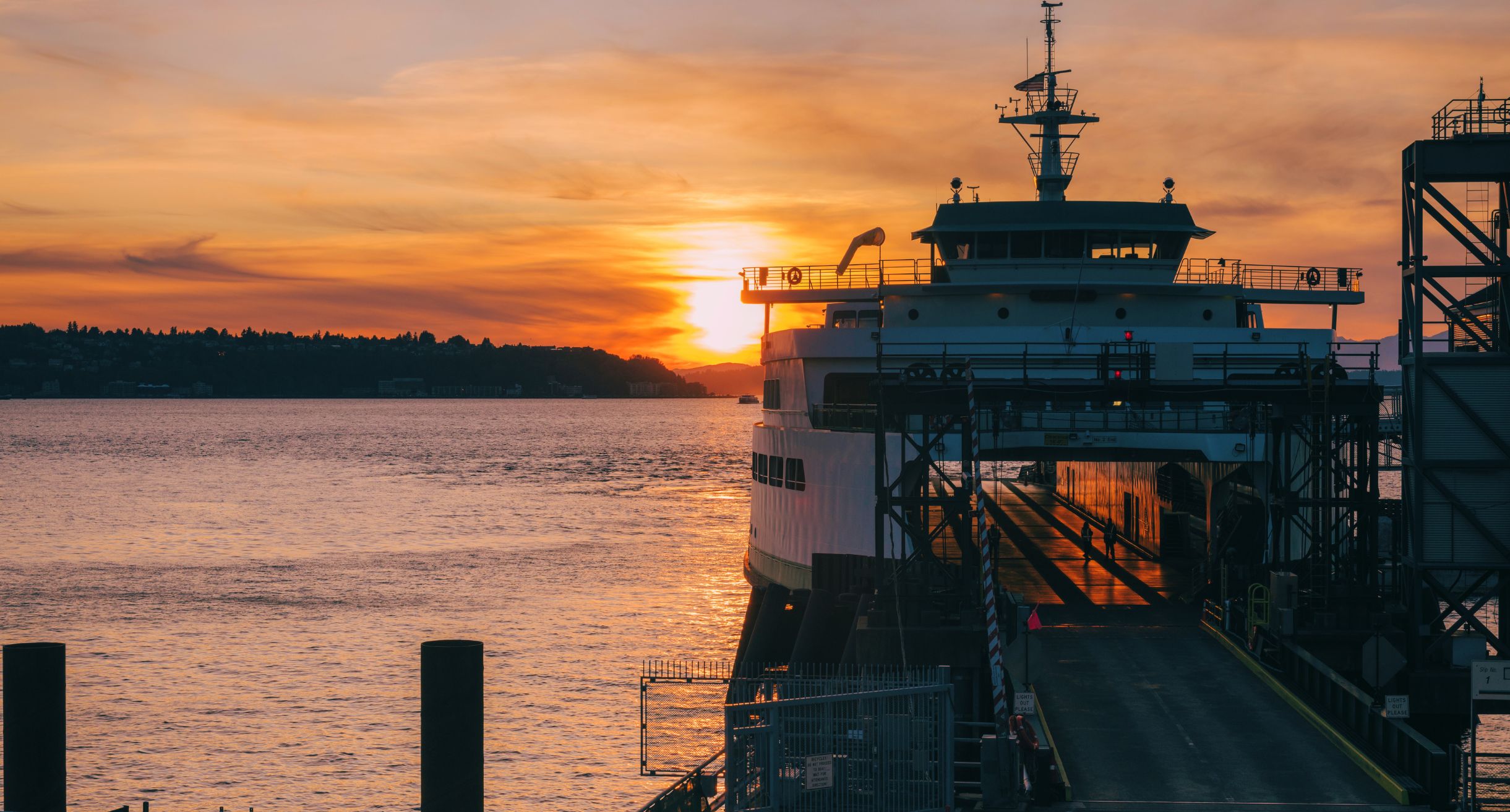
Who says you can’t navigate paradise from the comfort of a ferry ride? Our experience when taking a ferry to or from Whidbey Island is that it offers a unique and picturesque experience that is packed with charm and several noteworthy advantages. Follow along to find out the top 10 reasons we suggest you take a ferry the next time you need to cross the water.
Scenic Beauty:
The Washington State Ferries treat passengers to breathtaking views of the Puget Sound, surrounding islands, and the majestic Olympic and Cascade mountain ranges. It’s a visual feast for nature enthusiasts and photographers.
Relaxation:
Our ferries offer a peaceful and leisurely mode of transportation. Not only do you not have to navigate the hustle and bustle or sit in stop-and-go traffic to get to your destination, but ferry passengers can unwind on deck, enjoy the fresh sea breeze, or simply gaze at the tranquil waters, creating a serene and enjoyable journey to your destination.
Convenience:
The ferry system is an integral part of the Pacific Northwest’s transportation network. It offers a convenient way to connect Whidbey Island to the mainland, making it accessible for both commuters and tourists.
Time to Unplug:
Depending on who you are, you will either love or hate, the absence of Wi-Fi on most ferries. However, this absence of connectivity encourages travelers to unplug from the digital world, promoting relaxation and providing an opportunity to disconnect, unwind, and take in the spectacular atmosphere surrounding you.
Wildlife Watching:
Keep an eye out for marine life during the journey. It’s common to spot seals, sea lions, dolphins, and various seabirds while crossing the Sound. If you get to snap a picture, don’t forget to tag us at @windermere_whidbey_island on Instagram.
Community Experience:
Passengers often strike up conversations and share stories while riding the ferries which fosters a sense of community. It’s a chance to connect with fellow travelers or engage with locals who cherish their island home. Such an opportunity for learning about the island if you are new here. If you are hoping to learn more about the island or looking for a place to live and aren’t currently working with a realtor, connect with us here so we can be your guide.
Adventure Starting Point:
For tourists, the ferry ride to Whidbey Island marks the beginning of an exciting adventure. It is the gateway to exploring the island’s charming towns, outdoor activities, and natural wonders.
Child-Friendly:
Ferries are child-friendly, so you don’t have to feel like you can’t go because you have kids. You can stay in your own vehicle if you choose to do so, however, many ferries offer play areas and tables for kids. In fact, the experiences of riding a ferry can offer opportunities to teach children about marine life and navigation.
Cafes and Dining:
Many ferries feature cafes or dining options where passengers can enjoy a meal or snack while taking in the views.
Sunsets and Sunrises:
This might just be one of our favorites. The early morning and evening ferry rides provide an opportunity to witness stunning sunrises and sunsets over the water, creating magical moments for travelers. We highly suggest you experience a sunset or sunrise ferry ride at least once in your life time.
In essence, taking a ferry to or from Whidbey Island is not just a means of transportation; it’s an experience that adds to the overall allure of the island, combining convenience with a touch of adventure and a generous serving of natural beauty. Click here to check out the Washington State Ferries schedules and to book your next ride. If you have fallen in love with Whidbey and are considering staying connect with us here.
Who are you going to call

Who are you going to call? That’s up to you. How are you going to call? That’s up to you, too; but, that’s a shorter list. It is also easier to talk about. Welcome to Whidbey, or your new home, or your curiosity. Phone service on the island is unique for several reasons; and can even get into international issues. Here are some of your choices.
Landlines:
Landlines exist, and can frequently outperform more modern options. A direct connection between two phones can be clearer, simpler, and make sense in older homes. Landlines can also avoid issues about spots in a house where signals are blocked by things like masonry. They can also be handy during a power outage, if the provider keeps the lines charged. Even better is a provider that buries the lines so they’re less likely to be impacted, literally, by falling branches.
But, landlines have limits. Putting a landline in your pocket can be done, but is somewhat useless when out of range of the home’s base station. (e.g. Whidbey Telecom, Ziply)
Mobile Phones:
Welcome to the modern era when phones in pockets are taken for granted, as is roaming. One phone, one country, that’s pretty good. Cell phones, mobile phones, isn’t that what everyone uses? The major providers are here, which is definitely appreciated. As a solution, mobile phones are the dominant choice.
Mobile phones are the dominant choice, but not every provider can provide unlimited coverage. Can you hear me now? You can still hear people say that on a call as you drive through gaps in coverage. Ridges, buildings, and antenna blind spots can have you checking whether you have five bars, or as little as one bar, or even no bars. Electronic signals can’t be guaranteed to reach the base stations of the corporate carrier. Coverage is pretty good, but a temporary interruption while driving around isn’t as important as a poor signal at home. Check coverage for where you want to live.
Coverage Maps:
Find a home in the areas with your ideal coverage here.
When in doubt, drive there and check. If you are buying a home the home inspection time is a great chance to check cell reception too, make as many calls in as many spaces on the property as possible. If you get the opportunity, check in with the neighbors, possibly on social media, and learn what they use. (e.g. AT&T, T-Mobile, Verizon, US Cellular). Talk with your agent about their experience with coverage. Don’t have an agent? Connect with one here.
VIOP:
Keep in mind, some people want to live in those quiet pockets. There’s someone for everywhere.
Got a good internet connection but no cell signal? VOIP can be an option. Voice Over Internet Protocol routes your calls through the internet, not a phone landline or a cell tower. Some cell phones are already set up to choose the better path between a tower and the internet. That can be the best of both worlds. (e.g. Frontier, Vonage, Wave)
Did That Message Just Say Welcome to Canada?
Hello, Canada. Saying hello to Canada is easy enough. You can see it from the island. Wave at it. Your phone might be doing that too. The farther north and west you get on the island the greater the likelihood that your phone may connect with a tower in Canada. You can get charged for international roaming without leaving the US. Fortunately, your phone should tell you when it does that, but it is worth checking, occasionally. (e.g. Telus)
The Final Message:
The choices aren’t infinite, but there may be more than you want to research for your corner of the island. The denser the population, the more likely you’ll have plenty of choices, many of which run those big national ad campaigns. Our island’s more remote locations, however, can be so unique, so idiosyncratic, that it might make sense to visit and try calling friends and family.
As technology continues to invent new options, the choice continues to change. Now that satellite phones have progressed from specialized Globalstar handheld units to Starlink’s internet access a homeowner can create their own connection, assuming those pesky hills and bills don’t get in the way. If you’ve got power and the right view, you’ve got internet and phone; regardless of whatever might be interrupting everyone else’s day or night.
Who are you going to call? That’s up to you. How are you going to call? That’s up to you, too; but, now you may understand why one answer doesn’t apply to everyone. Thanks, Ma Bell and your old bakelite landline phones wired to a wall; but, we’ve become much more mobile, and hopefully more stylish. Make a call from Whidbey? You’ve got options. Try to call us now: 360.675.5953.
Practical Magic
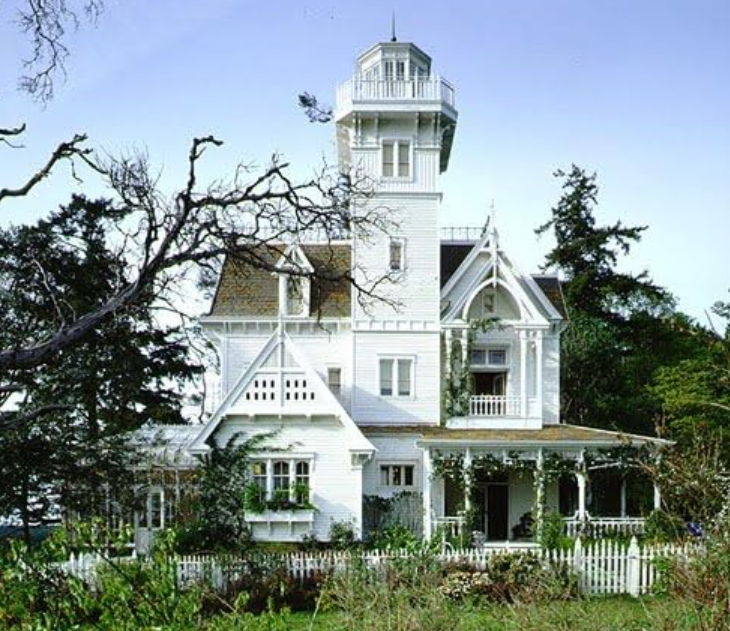
“The small town scenes were filmed in downtown Coupeville, Washington, a Victorian-era seaside port town located on the south side of Penn’s Cove on Whidbey Island.” – IMDB
But you knew that, right?
For being so big and loud, Hollywood’s visits to Whidbey are usually quiet and out of the way. Practical Magic went all out. Twenty-five years ago the film crews and the stars swept in, painted Coupeville white, and played pretend that it was a quaint seaside town – in New England. That’s Hollywood. It’s about time for another visit.
Let’s get the name-dropping out of the way:
Sandra Bullock, Nichole Kidman, Stockard Channing, Dianne Wiest, and some guys. Stars for sure, but pardon locals who also want to spot familiar stores and streets, parks and views.
Local Destinations:
Front Street dominates. The Wharf is in the background. Stores were temporarily redecorated. Much of it was different, but not out of place. Seafood, a farmers’ market, herbs and potions – though they played a different role. Very familiar.
As much as we may feel that they could’ve filmed the entire movie here, they also used places like the San Juans. The stellar house would be a natural tourist site, but it was a prop, torn down after they were done. Has anyone tried to rebuild it?
It is a comedy and a romance. It is also a fantasy, or at least has fantastic magic. It is also a thriller, just in time for Halloween.
You might have to watch it more than once:
Once for the story, once for the setting, and then maybe again. Some people make this a part of their Fall ritual movie night. By the way, the food and drink choices that pair with it are brownies and chocolate cake for breakfast and margaritas at midnight. (Jimmy Buffett fans may also appreciate the latter.)
Filmed on Whidbey:
Practical Magic is part of a long list of movies filmed here.
Some familiar names:
- Free Willy 2
- Snow Falling on Cedars
- The Ring
- Double Jeopardy
- The War of the Roses
- Oh yeah, and Top Gun: Maverick.
Smaller creations are made here, too:
Deception Pass Bridge and the hairpin turn at Ebey’s Landing frequently show up in ads. The ferries are iconic enough to be a proxy for all of Puget Sound.
The perfect location for filming:
While some visitors and locals can complain about overcast skies and dull weather, someone filming a scene can appreciate a lack of shadows. It is easier to stitch retakes into the rest of the film when something filmed in sunshine then has to match something filmed in the shade. Dull weather means less worry about wind and rain – at least compared to a lot of other regions. Not too hot or too cold, usually. We’ve also got talented people living here, great backdrops, and pleasant places for the stars and the crew to stay in.
It may be a twenty-five year old movie, but it skips technology (hey, they got magic!) and Coupeville is charming. Don’t be surprised that October may have a few more tourists visiting. There are some great costume opportunities. Let’s just hope the weather treats us all well.
“But there are some things I know for certain: always throw spilt salt over your left shoulder, keep rosemary by your garden gate, plant lavender for luck, and fall in love whenever you can.” – Sally Ownes, source:IMDB
And,
“There’s a little witch in all of us.” – Aunt Jet Ownens, source: IMDB
Links:
Saving Whidbey
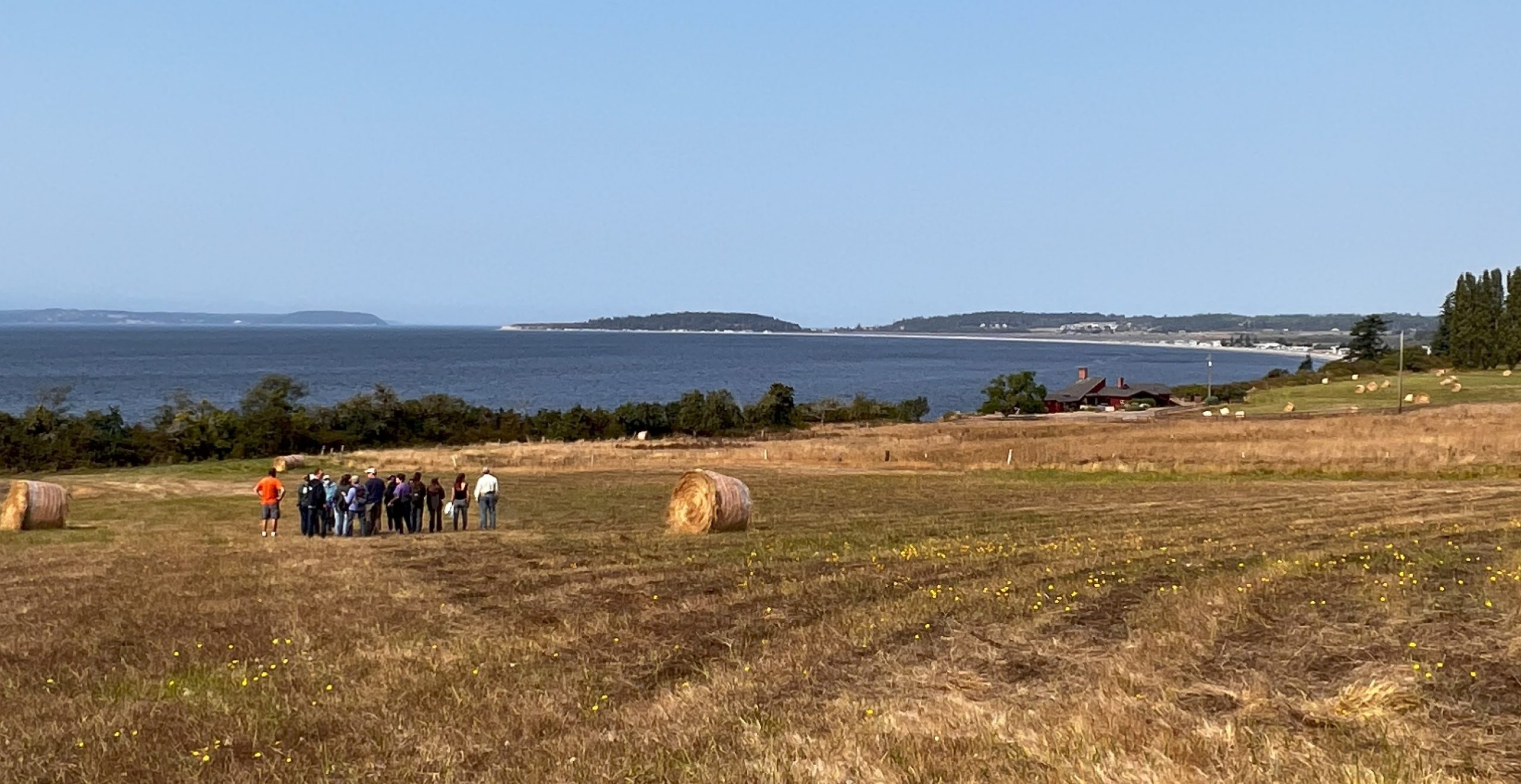
“One of the reasons most people find Whidbey Island so special is the beaches, forests, and farms. This is why having one of the most spectacular properties on the island that incorporates all three being protected forever is such an amazing thing!”
You’ve probably seen them, yet another of Whidbey’s gravel driveways that reach off from the highway, winding through a forest, to – well, someplace only a few know about. They are mysteries, but someone saw some reason to build a road. Sometimes that’s for an estate, or a farm, or simply a view. The Land Trust just acquired one of those properties that has all three.
Saving Whidbey
“What can I do to help protect the island?” That’s the question one realtor asked during a tour of Keystone Farm and Forest Preserve. They asked a good question to the right people because Whidbey Camano Land Trust helps people do that. A group of Windermere realtors were fortunate enough to get an early tour of Keystone Preserve, one of the Land Trust’s most recent acquisitions – and most impressive properties to protect.
History of the Land
For over a century, the land has been farmed with conventional methods (longer than that by Salish Sea Tribes). For decades, one family owned the property. They asked that same question; what could they do to save a farm with an expansive view because of 2/3 of a mile of waterfront. And it has dozens of acres of prairie farmland. And it has dozens of acres of forest upland from the shore. They add up to over 200 acres of a unique estate. Thanks numerous state and federal grants (including help from the Navy), some fortunate situations, and a bit of good luck, Keystone Farm and Forest Preserve will continue to be farmed and preserved.
Most of the folks on the tour were stopped in their tracks by the view as the long driveway rounded the bend from forest to farm, from trees to pastures, and expansive water views. Look left down Admiralty Inlet. To the right is Admiralty Cove. Straight across is the Olympic Range, Port Townsend, and out to the Strait of Juan de Fuca.
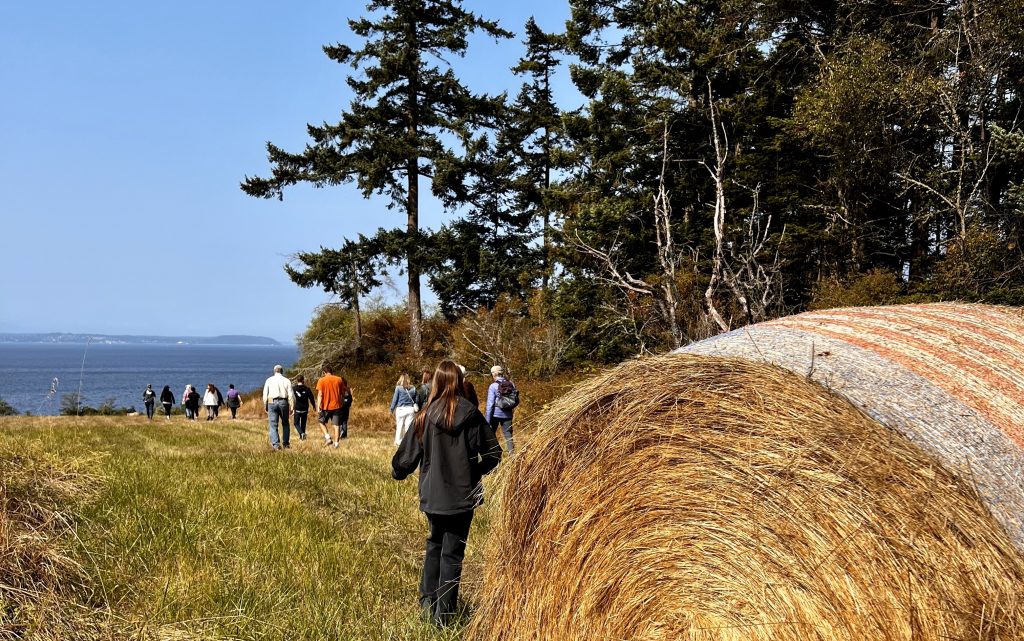
In April 2022, the Lea family sold the property. They had owned the property since 1947, but families shift, and they realized that they’d rather let someone else own and use it than leave it effectively vacant, locked away without anyone being able to enjoy it. The Land Trust stepped in, with help, of course. In a couple of years, Keystone Preserve will be opened to the public. Patience is necessary because a driveway that suffices for a family and a farm isn’t enough for two-way traffic, especially if emergency vehicles need access. The plan is to have parking for school buses and a shelter for learning.
There’s history here. The water, the prairie, and the forest are fertile. The Skagit people knew its value. They even maintained the prairie through controlled burns. The open land that reaches down to the water was so distinctive that early explorers noted it. One ship’s Captain, Robertson, returned and helped homestead it circa 1850.
A Budding Future
The future is also being established because the Organic Farm School has already been invited to plant trial fields. And, of course, it will be a place for people to enjoy. It is the nature of the Land Trust that the future can be preserved. That era has already begun.
That’s the plan. Plans require action, so sign up with the Land Trust to volunteer. The quicker the work gets done, the sooner people can visit for the sake of visiting. In the meantime, volunteers get early access to the views. Old farms are fertile, so there will be some weeds to tend. As the site gets prepared for the public, there will be opportunities to help. Maybe linger a bit after the work party is done.
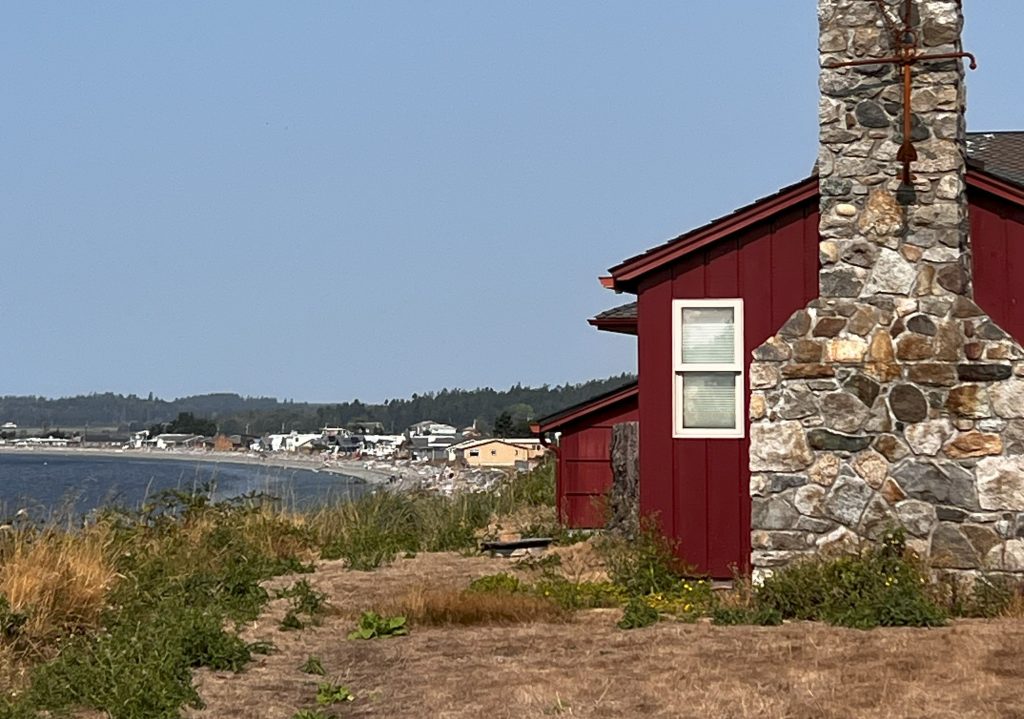
Find a comfy spot and watch for raptors overhead, whales and seals and salmon, and almost every big ship that’s using Puget Sound to get to our deep, sheltered harbors. Or get up and wander along the forest trails.
The property is also a place to learn about what it takes to live on the land on an island. Sites that look ideal can require a bit of research, thought, and consulting with experts. How close can a house be to the water, considering waves that can redistribute a bluff? Upland forests grow because they have access to water, which might mean ravines or wetlands. Owning such a property is also a lesson in how forests collect and filter rainwater, as well as stabilize bluffs and replenish our aquifers. Sometimes, trees may be weak or in a dangerous spot; but, it was pointed out that trimming the difficult parts while leaving the bottom thirty feet provides some of the benefits of habitat and soil stability. Learning about such issues by visiting a property is simpler than doing so in the middle of a transaction.
The land will restore something closer to its original nature, and it can be valuable to see natural forests, natural bluffs, and natural shorelines. The Land Trust doesn’t buy land to simply buy land. Keystone Farm and Forest Preserve will help the health of the habitat for lots of wildlife, particularly salmon and other fish that rely on eelgrass and bull kelp. It will provide a place for learning and demonstration. Protecting land also means protecting our drinking water by ensuring we have pockets of aquifer recharge.
The day of the visit ended with a show of seals and salmon along the shore.
People on Whidbey are proud of its rural character; so, preserving a farm, a forest, and a shoreline makes sense. “What can I do to help protect the island?” Be like the Lea family and think of the future.
“It will be a great place for people to learn about organic farming practices, how to manage private forests for health, natural shoreline protection techniques, and an additional beautiful and scenic place for walking. You can learn more about this property and all the Land Trust properties on their website. Loads of their properties are open to the public with great trail systems.” There’s probably one near you that you didn’t even know existed!
Fort Casey State Park: Unique History and Breathtaking Views
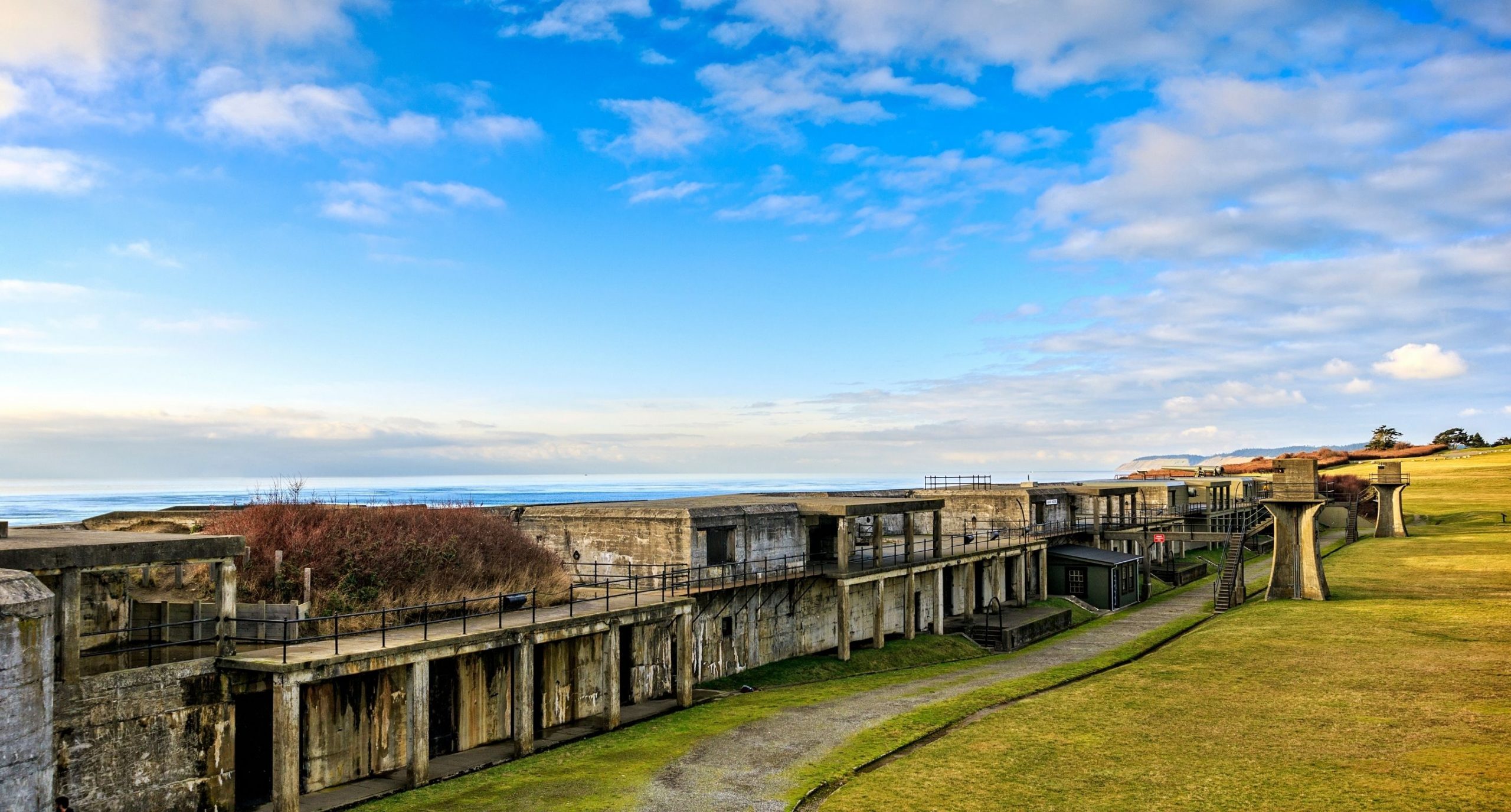
Located on Whidbey Island, Fort Casey State Park is a great place to visit for those looking to explore the Pacific Northwest and Whidbey Island. It’s hard to pick just one thing that makes this place so special! So we picked three!
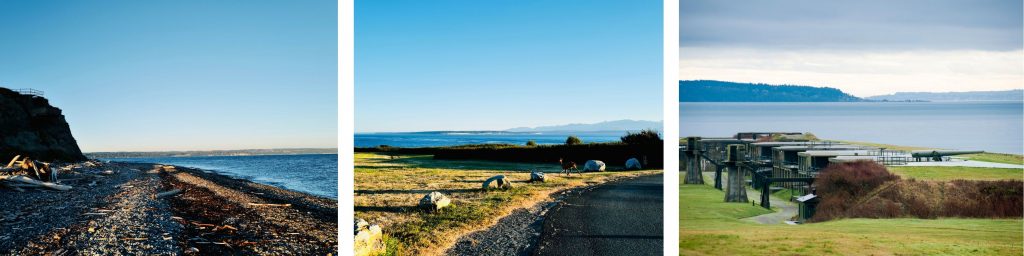
#1 The park’s location is perfect for history buffs who also love the outdoors. There are miles of trails winding through forests filled with towering Douglas Fir trees, open grassy fields, and dotted throughout are all the historical infrastructure. It affords several unique photo opportunities from the expansive water views, military relics like the large cannon guns, the infamous Admiralty Head Lighthouse, and fauna like bald eagles and deer.
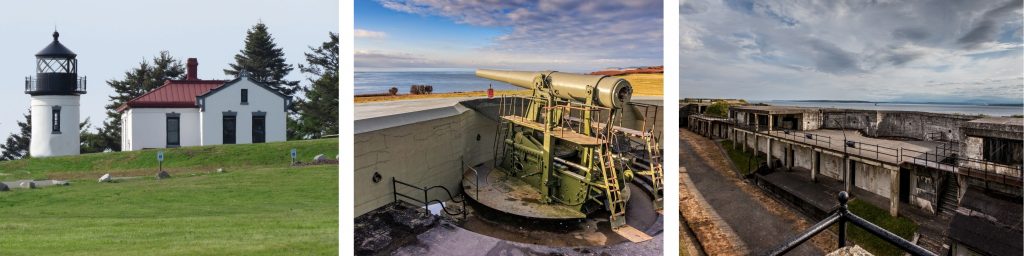
#2 There are so many stories associated with this one location. History buffs will learn about the Civil War-era military fort that was built here in order to protect against a potential invasion via water from Japan or Russia during World War II with the “Triangle of Fire. The Admiralty Head Lighthouse adds another slant of historical intrigue. The original lighthouse, which was built in 1894 and first lit on January 21st of 1895 could be seen as far away as 14 miles with a focal plane of 128 feet above the high tide line. You can now visit the lighthouse in its expertly restored state and learn from the volunteer docents that keep the small museum housed inside. Learn more here http://www.washingtonlighthouses.org/data/lighthouse_ah.html
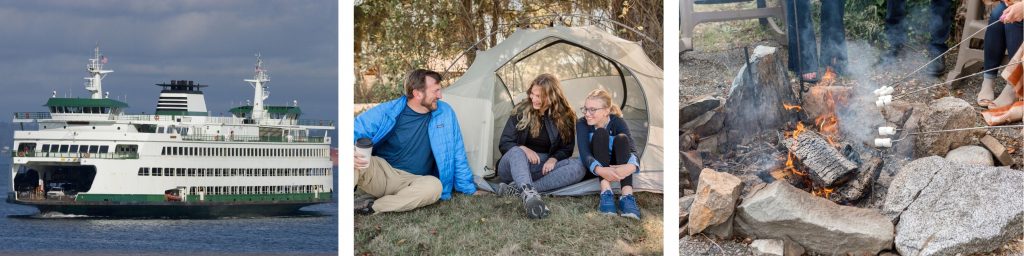
#3 So many ways to stay! If a day trip is not long enough to soak it all in you can book a campsite at the base of the bluff on the Southern end of the park. It’s located on a bit of a sandy plateau right next to the Ferry landing that serves the Washington State Ferries Port Townsend to Coupeville route. In fact, a neat feature of weekend camping here is that you can walk on the Ferry and explore the historical Water Street in Port Townsend! Grab an amazing meal from one of Port Townsend’s excellent restaurants just don’t miss the last ferry back! If that sounds too risky then head over to Callens Restaurant for some of Coupeville’s best food and drink. If camping accommodations is not your thing you can stay at Camp Casey with a variety of accommodation types. Check it out here https://casey.spu.edu/staying-at-camp-casey/lodging/
Whichever you choose, a day trip or an overnight stay at Fort Casey State Park is sure to leave you with some one-of-a-kind memories!
