

 Facebook
 X
X
 Pinterest
 Copy Link
Paddling Penn Cove
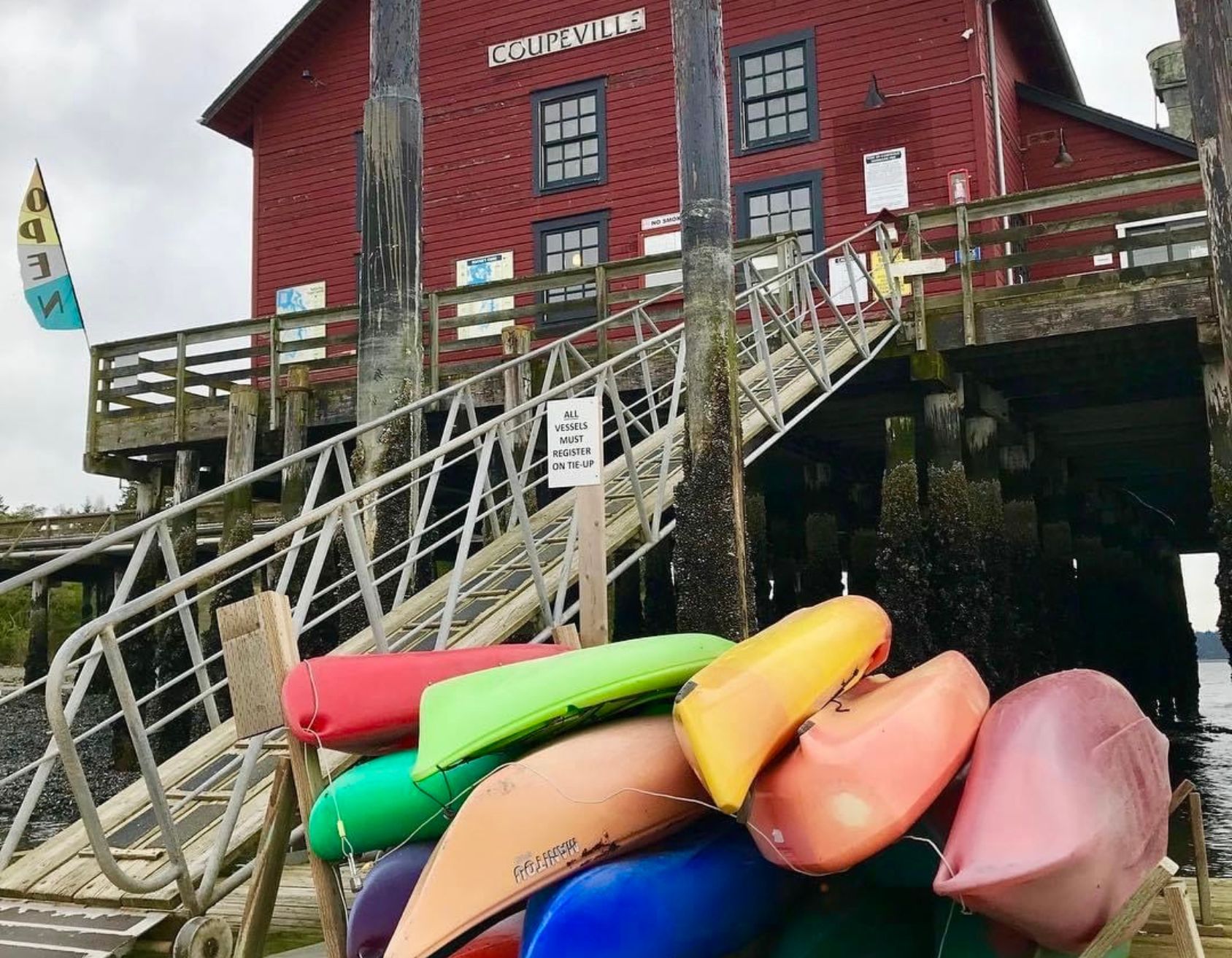
Imagine starting your day paddling Penn Cove with salt-kissed air, sunshine, and a kayak waiting just steps from your front door. On Whidbey Island, that’s not a dream, it’s everyday life for locals and visitors at the historic Coupeville Wharf!
The Wharf
The wharf dates to the early 1900s and once served as a crucial commerce dock for grain and goods. Today, it’s a vibrant community hub with cafés, shops, and lakeside experiences that capture the island’s relaxed rhythm.
On the wharf you’ll find Wharf Dog Paddle, a locally loved canoe and kayak rental outfitter that lets you trade your shoes for a paddle! Rentals are typically available during daytime hours (often mid-morning through late afternoon). Whether you’re planning a quick paddle or a longer exploration of the cove Wharf Dog Paddle makes it easy to slip onto the water.
Paddling Penn Cove
As you float into Penn Cove, the real magic happens! Seals often pop up to investigate, seabirds wheel overhead, and the water seems to invite you to slow down and take it all in. It’s one of those quintessential Whidbey moments where nature and lifestyle meet.
Life on Whidbey
Living on Whidbey doesn’t just mean owning a home. It means living where your favorite weekend adventures are part of your backyard. Whether it’s spontaneous paddling at sunset, strolling down the wharf for coffee, or popping into town for lunch afterward, this corner of Coupeville captures the best of island life: peaceful, playful, and filled with simple joys that never get old.
In this community, life isn’t measured in square footage alone, but in memories made on the water, just steps from your front door. However, if you have visited our lovely island and are dreaming of calling Whidbey home, connect with us! We can help.
Photo By: Nancy Alvarado
The Colonel’s House
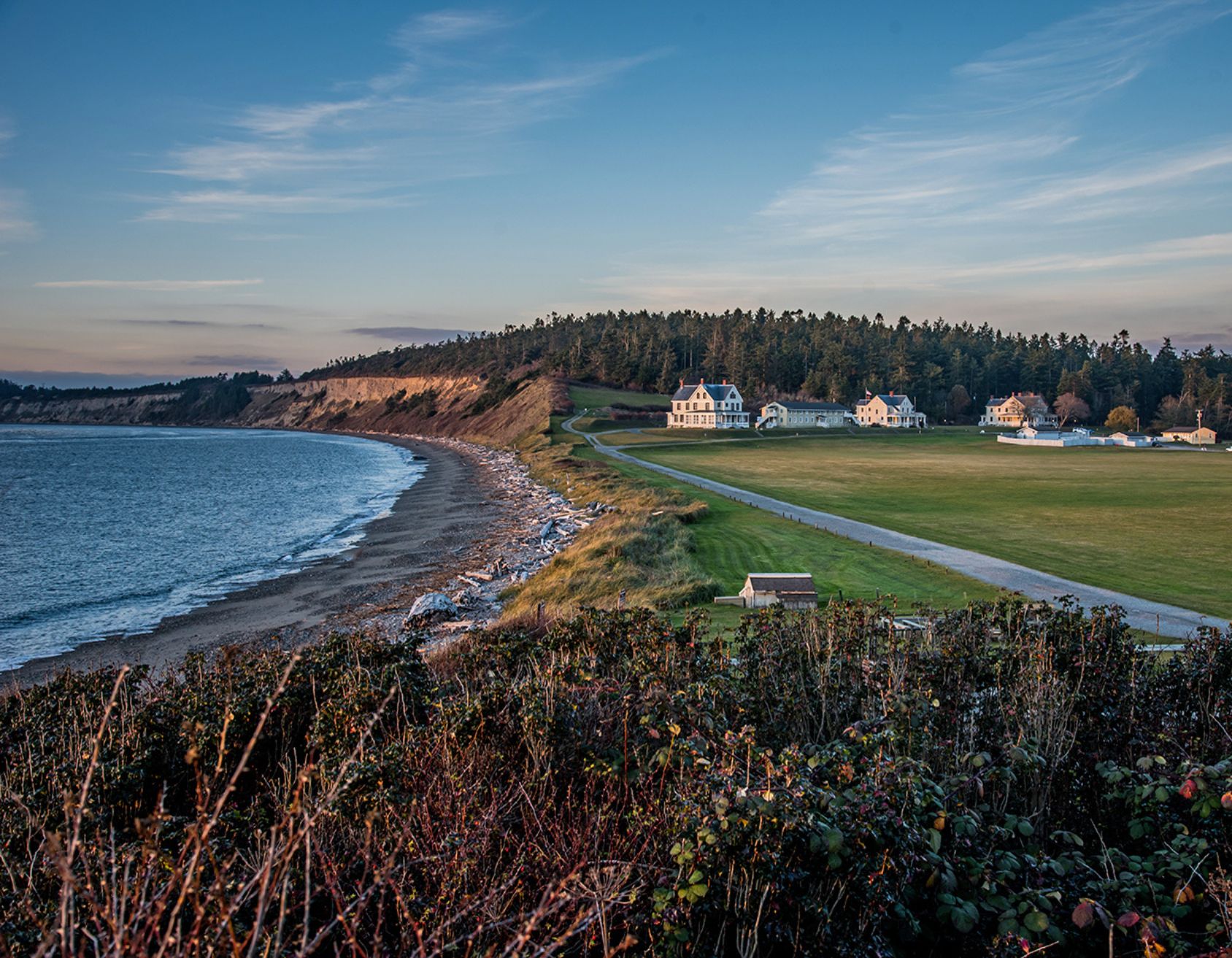
In a word, The Colonel’s House is imposing. Not in a scary way, but in a “yes sir, right away sir” kind of way. Once the commanding officer’s quarters at Fort Casey, this grand 1904 home stands with the quiet authority of a place that’s seen things yet still manages to keep its porch pristine.
The Colonel’s House Today
These days, the Colonel’s House has traded its military roots for a softer kind of mission. Today, it is part of Seattle Pacific University’s Camp Casey Conference Center. The Colonel’s House hosts families, couples, and groups looking to reconnect and recharge. The home blends historical elegance with modern comfort. Much of the original charm remains, from creaky stairs to the sun porch that guests never want to leave. But don’t worry, the kitchen’s fully updated for all your pancake-flipping needs.
From its perch above the old parade grounds, the view is nothing short of breathtaking. You can see straight across Admiralty Inlet, where the Strait of Juan de Fuca meets Puget Sound. It’s the kind of view that makes you stop, breathe a little deeper, and wonder how you got so lucky to be standing there. If you’re quiet, you might just hear echoes of the past carried on the breeze.
Outside Adventure Calls
Beach strolls, forest trails, whale sightings, bald eagles, and sunsets that stop you in your tracks are all part of the experience at The Colonel’s House. While you’re visiting, be sure to explore the nearby town of Coupeville. You can spend your day taking beautiful pictures at the Wharf, grabbing a bite at Toby’s Tavern (famous for its mussels), enjoying fresh pastries at Little Red Hen Bakery, or shopping for handmade goods at Kingfisher Bookstore and Lavender Wind. It’s small-town charm at its finest. Better yet, it’s all just minutes away.
Whether you’re here for the history, the view, or just some well-earned rest, the Colonel’s House has a way of making you feel like you belong, right in the heart of its story.
Ready to call Whidbey home? Let’s Connect!
Photo By: Cynthia Woerner Photography
The Ferry House at Ebey’s Landing
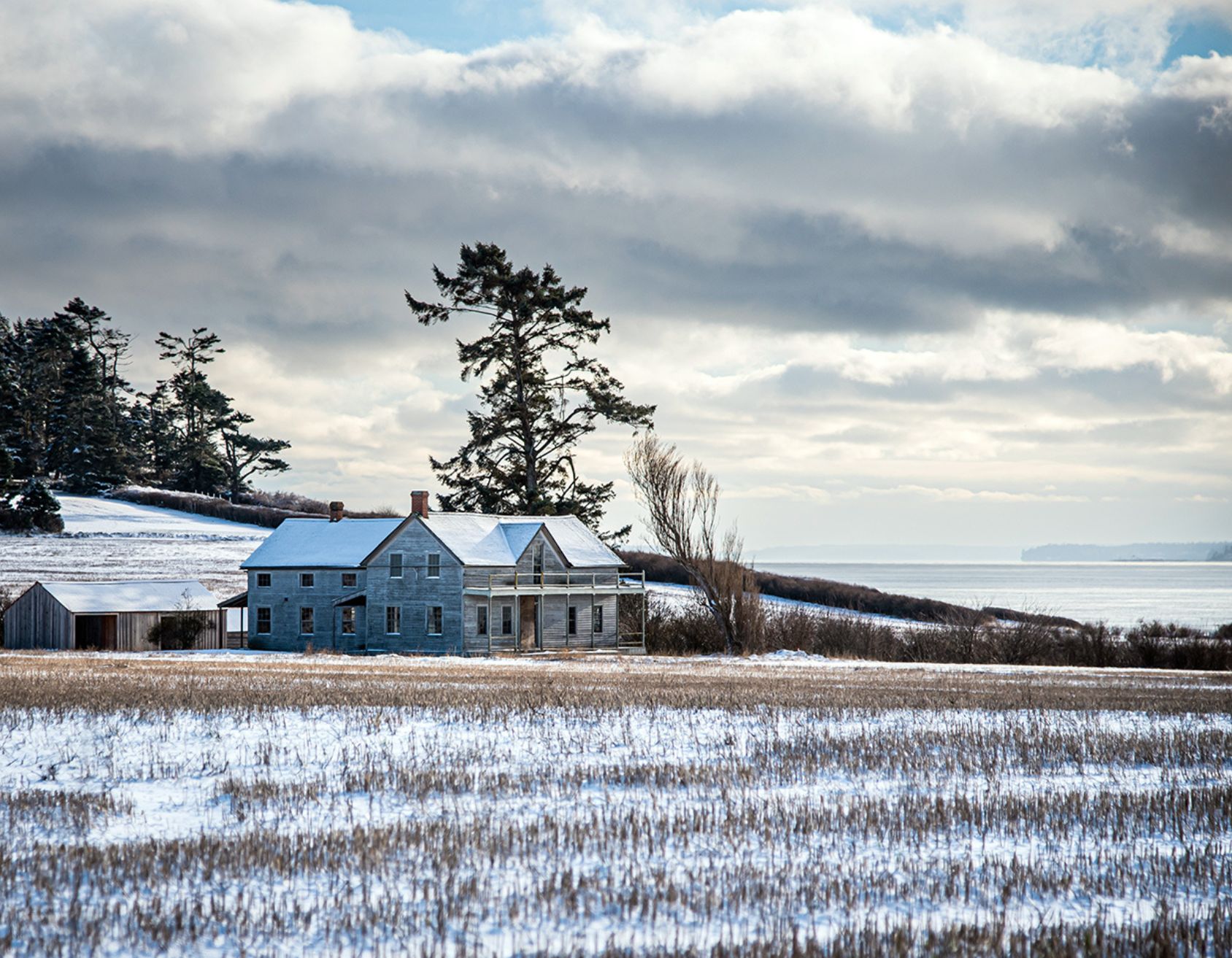
If Whidbey Island had a heartbeat, it would echo across the open prairie at Ebey’s Landing. Few places capture that steady rhythm quite like the Ferry House. This enduring landmark reflects the island’s history, character, and quiet sense of place. Whidbey’s story lives on through the Ferry House at Ebey’s Landing.
The Ferry House at Ebey’s Landing History
Built in the early 1860s atop the Ebey family’s original 640-acre land claim, the Ferry House sits high above Puget Sound, overlooking Ebey Prairie and the waters that have long connected Whidbey Island to the mainland. Long before “water views” or “heritage homes” became real estate buzzwords, this home served a practical and welcoming purpose. Travelers arriving by boat found warmth, rest, and a sense of arrival here. It was the first impression of Whidbey that was as gracious then, as it feels today.
The Ferry House at Ebey’s Landing Today
What makes the Ferry House especially compelling is how beautifully intact it remains. The home stands not only as a preserved structure, but as a living reminder that some properties are more than addresses. They are storytellers! They have borne witness to generations of change while remaining deeply rooted in their surroundings. In a world where newness often takes center stage, the Ferry House represents the enduring value of authenticity.
Magic of The Ferry House at Ebey’s Landing
In winter, the property takes on an added layer of magic. A light snowfall softens the prairie grasses, the roofline gathers a quiet dusting of white, and ferries move almost silently across the sound below. It’s peaceful and grounding, a scene that feels both cinematic and deeply familiar. Moments like this capture what so many are seeking today: calm, connection, and a lifestyle that elevates everyday life.
The Community
This is the essence of Ebey’s Landing and the surrounding communities. Protected open space, unobstructed views, and a commitment to preservation define the landscape. Here, history isn’t confined to just commemoration plaques or museums, it’s woven into daily life. Morning walks trace the same paths settlers once traveled. Seasonal changes unfold across the same horizons that have framed the island for more than a century.
Homes near Ebey’s Landing offer something increasingly rare. Beyond square footage, finishes, or amenities, they provide a connection…to the land, to the water, and to a story that continues to evolve. Living here means sharing space with history while enjoying the comforts and rhythms of modern island life.
In that sense, the true luxury of Whidbey Island isn’t found in excess, but in meaning. It’s found in places like the Ferry House, where past and present coexist, and where home is defined not just by walls and views, but by the life that unfolds around them.
If you have experienced the magic of the Ferry House at Ebey’s Landing and wish to make a move to Whidbey to enjoy the experience all year long, lets connect!
Photo taken by: Cynthia Woerner Photography
Admiralty Light House History
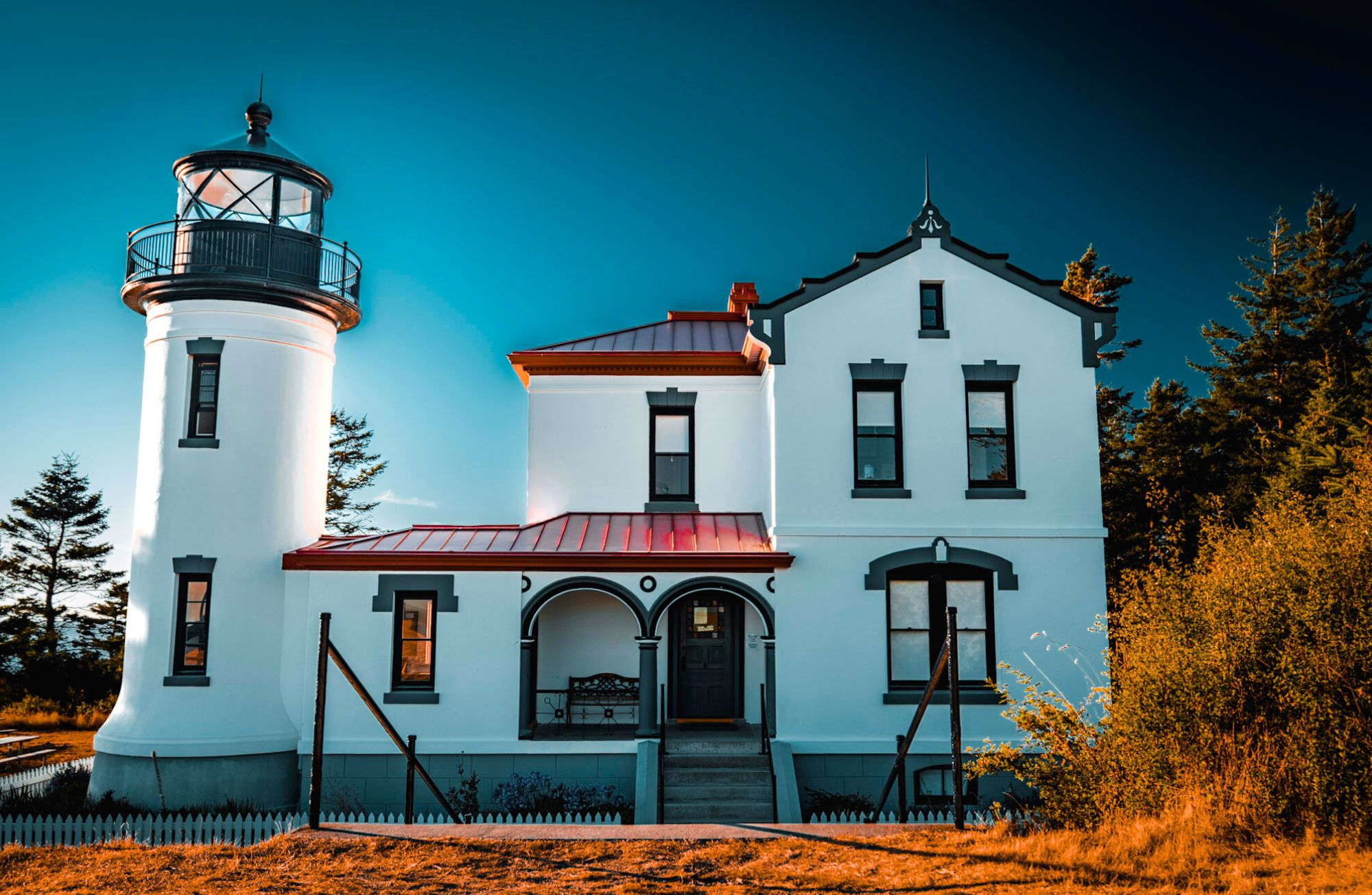
Photo by: @pnwdeparture
If you’re sailing into Admiralty Inlet from the open ocean Point Wilson sits to the West of you and Admiralty Head to the East. This entrance to the vast inland waters of Puget Sound is marked by lighthouses on either side to alert ship traffic at night. Let’s review some of Admiralty Light House History. The original Admiralty Head lighthouse was built in 1861 and had similarities to a church. It was later rebuilt in 1903 and decommissioned in 1922. Today it remains an iconic historical part of Fort Casey State Park. When open, the interpretive center features a real Fresnel Lens along with a fantastic collection of historic photos and even a gift shop. A Spiral Staircase leads to the lookout where you can enjoy expansive views of Puget Sound, the Olympic mountains, and watch the ferry as it crosses to Port Townsend.
Check out the rest of Whidbey’s beautiful destinations from this series here.

Clam and Mussel Harvesting on Whidbey
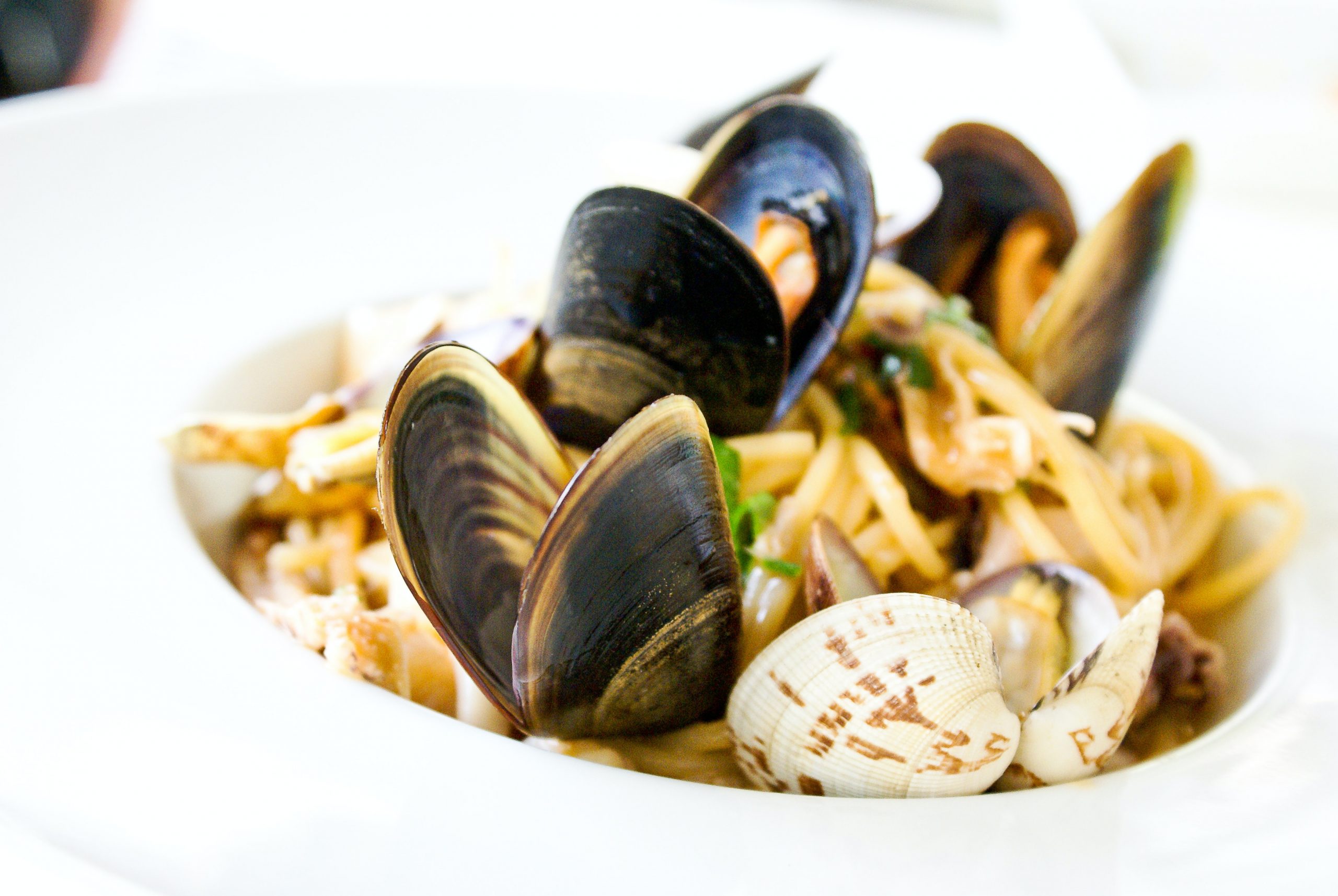
Whidbey Island is a spectacular destination in the Pacific Northwest that offers residents and visitors many opportunities to explore the natural world. One of the most popular activities on Whidbey Island is clam and mussel harvesting. If you are looking for a fun and rewarding way to experience the island’s unique ecosystem, clamming and mussel harvesting is a great way to do it.
Best Time to Harvest Clams and Mussels on Whidbey Island
The best time to harvest clams and mussels on Whidbey Island is during the summer months. During this time, the tides are low and the weather is generally mild, making it an ideal time to head out to the beach. It is especially important to check the tide charts before you head out to make sure you are arriving at the beach during low tide.
Clam and Mussel Harvesting Locations on Whidbey Island
There are a plethora of places to go clam and mussel harvesting on Whidbey Island. Some of the most popular locations for clam and mussel harvesting on Whidbey Island are:
- Penn Cove – Located on the northeast coast of Whidbey Island in Coupeville. Penn Cove is a great place to go clamming and mussel harvesting. This area is known for its large geoduck clams, which can be challenging to harvest but are well worth the effort.
- Double Bluff Beach – Located on the southern end of Whidbey Island in Freeland. Double Bluff Beach is known for its butter clams, which are easy to harvest and delicious to eat.
- Mutiny Bay – Located on the southwestern coast of Whidbey Island in Freeland. Mutiny Bay is known for its Manila clams, which are small but abundant.
Tips for Clam and Mussel Harvesting on Whidbey Island
Before you head out to harvest clams and mussels on Whidbey Island, there are a few things you should keep in mind:
- Make sure you have an active permit – Check here to make sure you have not only the right permit but also to buy your permit online or locate a local license dealer.
- Check the regulations – Make sure you are familiar with the regulations for clam and mussel harvesting on Whidbey Island before you go. You can find them by visiting the Washington Department of Fish and Wildlife’s website here. These regulations can change from year to year, so it’s important to check them before you head out.
- Bring the right gear – You will need a few basic tools to go clam and mussel harvesting, including a shovel, a bucket or bag to carry your harvest, and a clamming or mussel harvesting license if required. You’ll also want a sturdy pair of rubber boots or waders.
- Respect the environment – When you are harvesting clams and mussels, it is important to respect the environment. Only take what you need and make sure to leave the area in good condition for future harvesters so that you can enjoy harvesting year after year.
Clam and mussel harvesting is a fun and rewarding activity. With its many beautiful beaches and abundant shellfish populations, there are plenty of opportunities to explore the island’s unique ecosystem. Whether you’re a seasoned shellfish harvester or a first-timer, Whidbey Island is a great place to go clamming and mussel harvesting. Interested in making this beautiful place your home? Connect with us so we can help make your dream come true.
Penn Cove Park
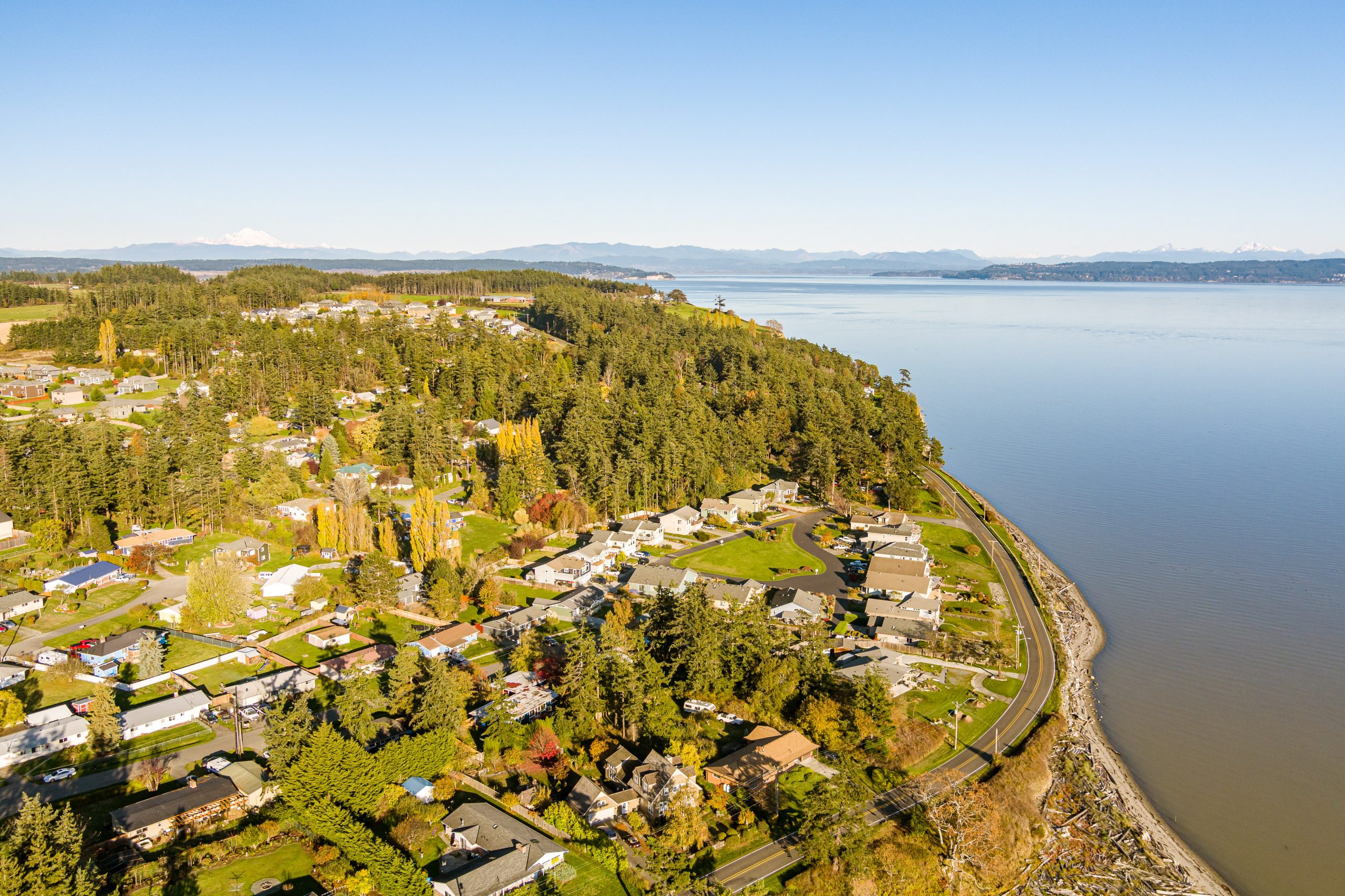
Welcome to Penn Cove Park. There is no doubt you will find a home you like here. There is an array of newer and older homes amongst this quiet community on the northern shoreline of Penn Cove off Monroe Landing. The central location between Oak Harbor and Coupeville provides not only more options for educational opportunities but also quick access to all the amenities both cities have to offer.
What sets this neighborhood apart from some of the others you might find on Whidbey Island is that residents not only have access to a private beach, but they also have a boat ramp. During the summer the water is warm enough to swim in because the cove is protected from the strong offshore winds that other water access areas are exposed to, making it likely the warmest beach on Whidbey Island. Not to mention, the incredible views of Penn Cove, gorgeous views of Saratoga Passage and the lovely historic Town of Coupeville. On sunny days you can spot snow covered mountains in the distance and a pod of Orca whales may be playing in the Cove.
One of the major benefits of living here is the short distance to the only Hospital on the island, Whidbey General Hospital. Downtown Coupeville offers quaint restaurants, galleries, shops, and a museum that overlook the cove offering luxurious views making for special trips all year round. Oak Harbor, just north of the neighborhood is home to Naval Air Station Whidbey Island where you will find an array of fast-food restaurants, car washes, and big-name shopping centers. In between the two discover the heart of Whidbey, with family farms like Three Sisters Market, small churches, and one of the very few left in the USA the Blue Fox Drive-in Movies with attractions like arcades, go-carts, and food!

Are you ready to get to know this Whidbey Island neighborhood better? Check it out here.
Have questions? We are happy to help. Connect with us here.
View this post on Instagram
Penn Cove Mussel Rafts
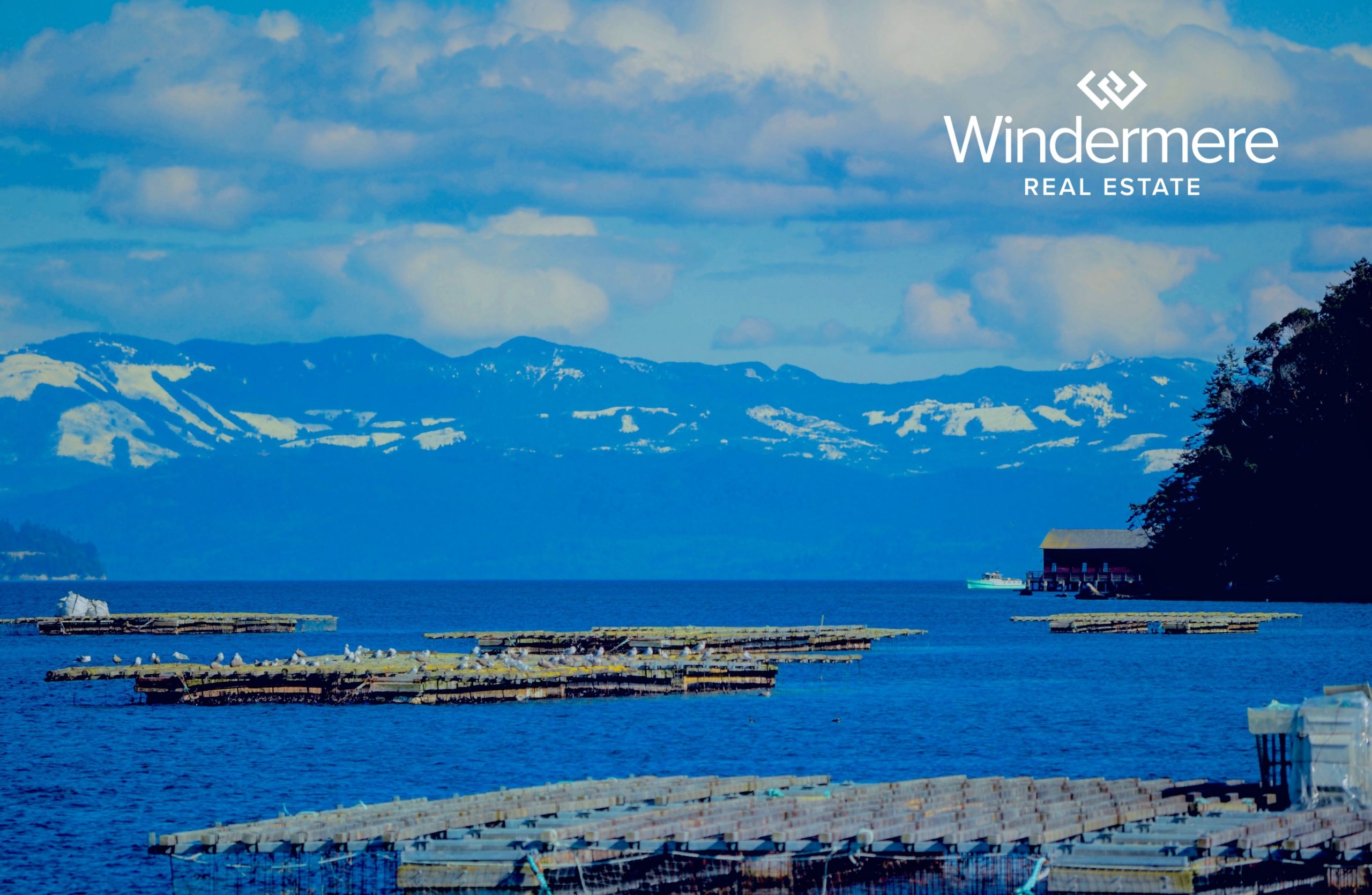
Gracing the waters of Penn Cove floats a particularly unique & quite famous feature of our island. Wood & rope intertwine to create seemingly countless rafts bobbing on the waves above and creating magic below… You may not know this, but Island county is home to the oldest & largest mussel farm in the United States. Penn Cove Mussels, Inc. began culturing mussels in 1975 with the desire to harness the cove’s naturally nutrient-rich water to harvest bigger and better mussels than the ones currently available on the market. The results were incredible! Penn Cove mussels grow at a remarkable rate, enabling the mussels to reach harvest size within one year. This rapid growth rate causes Penn Cove mussels to have a firmer texture, sweeter flavor, and a thinner shell with more meat. These crowd-pleasing mussels are a favorite of chefs all over the country and with only two hours separating Penn Cove from the Sea-Tac Airport; mussels harvested in the morning are easily on dinner plates in Houston by the evening. To read more about this local aquaculture visit our blog here.
Follow the photographer on Instagram @abhithapa.art
Check out the rest of Whidbey’s beautiful destinations from this series here.
Penn Cove Mussels
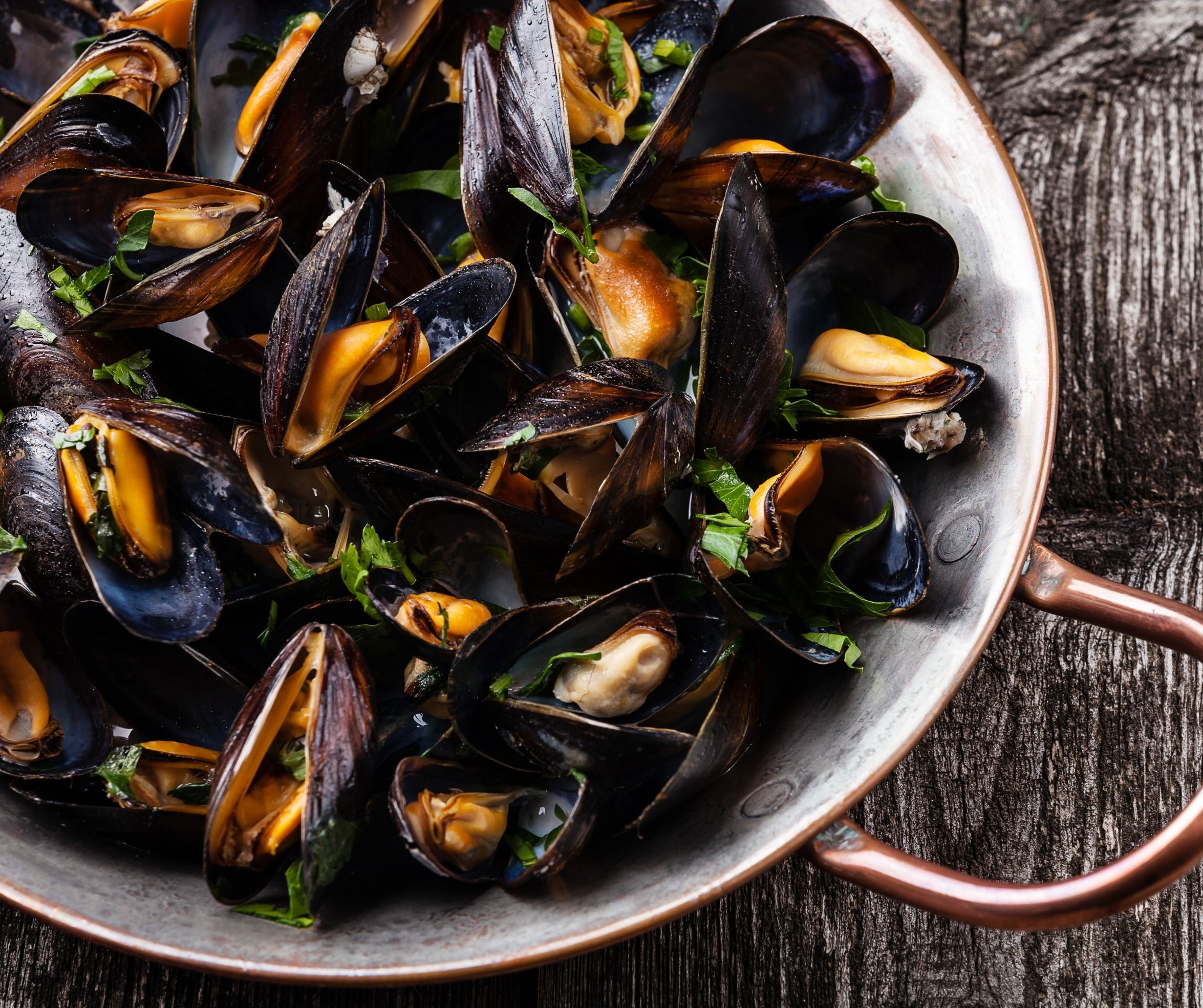
Every city or county has that one thing they are famous for. Their claim to fame that puts them on the world map. For some it is a world-famous sports team, others it is a historical location, still some gain fame from the presence of rare exotic animals.
For Island County, it is our mussels.

No, not the Emerald Cup kind of muscles we didn’t make a typo, we mean our Penn Cove mussels.

The History of Penn Cove Mussels
You may not know this, but Island county is home to the oldest and largest mussel farm in the United States (and maybe the world). Penn Cove Mussels, Inc. began culturing mussels in 1975 with the desire to harness the cove’s naturally nutrient-rich water to harvest bigger and better mussels than the ones currently available. The results were incredible! Penn Cove mussels grow at a remarkable rate, enabling the mussels to reach harvest size within one year. This rapid growth rate causes Penn Cove mussels to have a firmer texture, sweeter flavor, and a thinner shell with more meat. As you can imagine, it makes them quite a crowd-pleaser.
Whidbey Island’s proximity to Seattle and the Sea-Tac Airport mean these wonderful shellfish don’t have to be a local secret. Instead, these mussels are quickly air-shipped all over the world for others to experience and enjoy. Mussels harvested in the morning are on the lunch plates of Seattle seafood lovers by that afternoon and dinner entrees in Houston by the evening.
Celebrated with a Festival
35 years our Penn Cove Mussels have been celebrated with a festival. The original celebrations consisted of a community chowder contest that has morphed over the years into 3 days’ worth of activities and fun. The most recent events have attracted more than 6,000 mussels enthusiasts from far and wide. This event alone significantly helps the local merchants recover from the slow winter months.
Musselfest festivities typically kick off on a Friday with the “Mussel Mingle.” This is a time where people gather at the Coupeville Recreational Hall to enjoy food, drink, and music. The next two days are packed full of mussel cooking demonstrations from incredible Seattle chefs, the massive mussel chowder competition involving 16 different local restaurants, the mussel eating competition, tours of Penn Cove Shellfish, Inc., a mountain bike event (“Mussels in the Kettles”) and more!
Musselfest is a massive community affair that requires all hands on deck to pull off. Dozens of volunteers from all over Coupeville donate their time, finances, and resources to make this festival work. For the past few years, Windermere Whidbey agents have volunteered their time at the Waterfront Beer Garden where they serve up some great local ale while listening to amazing local musicians.

Unfortunately, like most events, the Penn Cove Musselfest was canceled due to Covid this past year, but the long-standing love for the festival carried on with the traditional T-Shirt and posters for all of the collectors. Past posters can be purchased here while supplies last.
The 2022 Musselfest is anticipated to take place March 4th, 5th, and 6th pending the state of Covid and guidance from the state and county. Click here to check the status.
4 Online Resources That will Blow Your Mind!

…and help when buying vacant land on Whidbey Island.
ICGeo
This is a sophisticated GIS mapping tool for Island County that can show layers and layers of geographically specific data overlaid on a map. Just turn on the layers of data you are interested in and search till your heart is content!
Island County Public Portal
Use this tool to look up a parcel number or a street address to determine if there are any site registrations, septic permits, or septic as-builts done for the parcel. It will also disclose any permits a property has recently applied for and its status.
Groundwater Spatial Analysis Report
This tool analyzes the potential groundwater quality at any given spot on the island by grabbing the data on wells within 1/8 mile of the point you choose on the map (or the nearest 40 wells). It automatically generates a phenomenal report. Just submit the application and the report is emailed to you almost immediately. This document will offer you more detailed information on what you get in the report
Washington Coastal Atlas Map
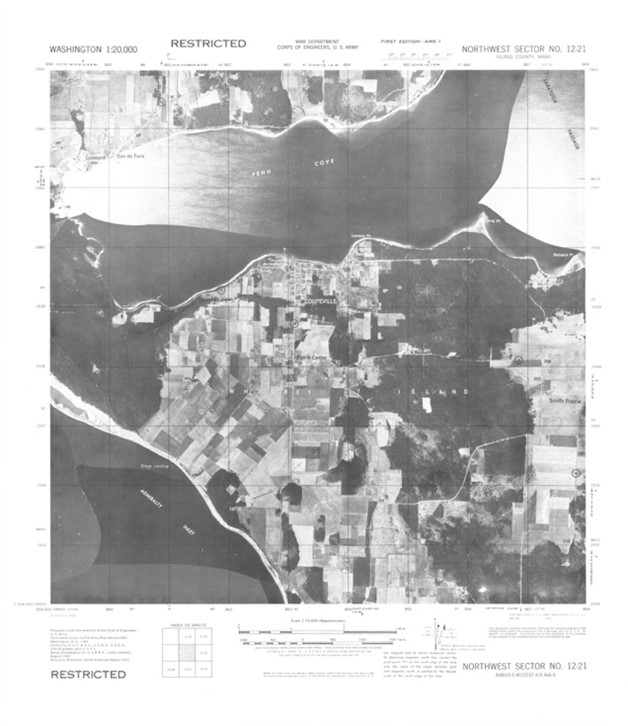
With the Shoreline Photo Viewer, you can compare what has happened to any stretch of shoreline over the last 50 years through photography! This tool uses 5 photo sessions capturing images of our shoreline all the way back to 1970. Even if you are not currently buying waterfront land this is a fun tool to compare what has happened to any section of our shoreline. There are even aerial photos from the 1940s. Check out the image below taken before Rolling Hills or Penn Cove Park were developed.
To find more amazing tools at your disposal or to get help using these tools to find specific information you can call us, and we will connect you with one of our knowledgeable Windermere brokers. You don’t have to be actively selling or buying a home! We just love to help! Contact us here.
What View is Best on Whidbey Island?
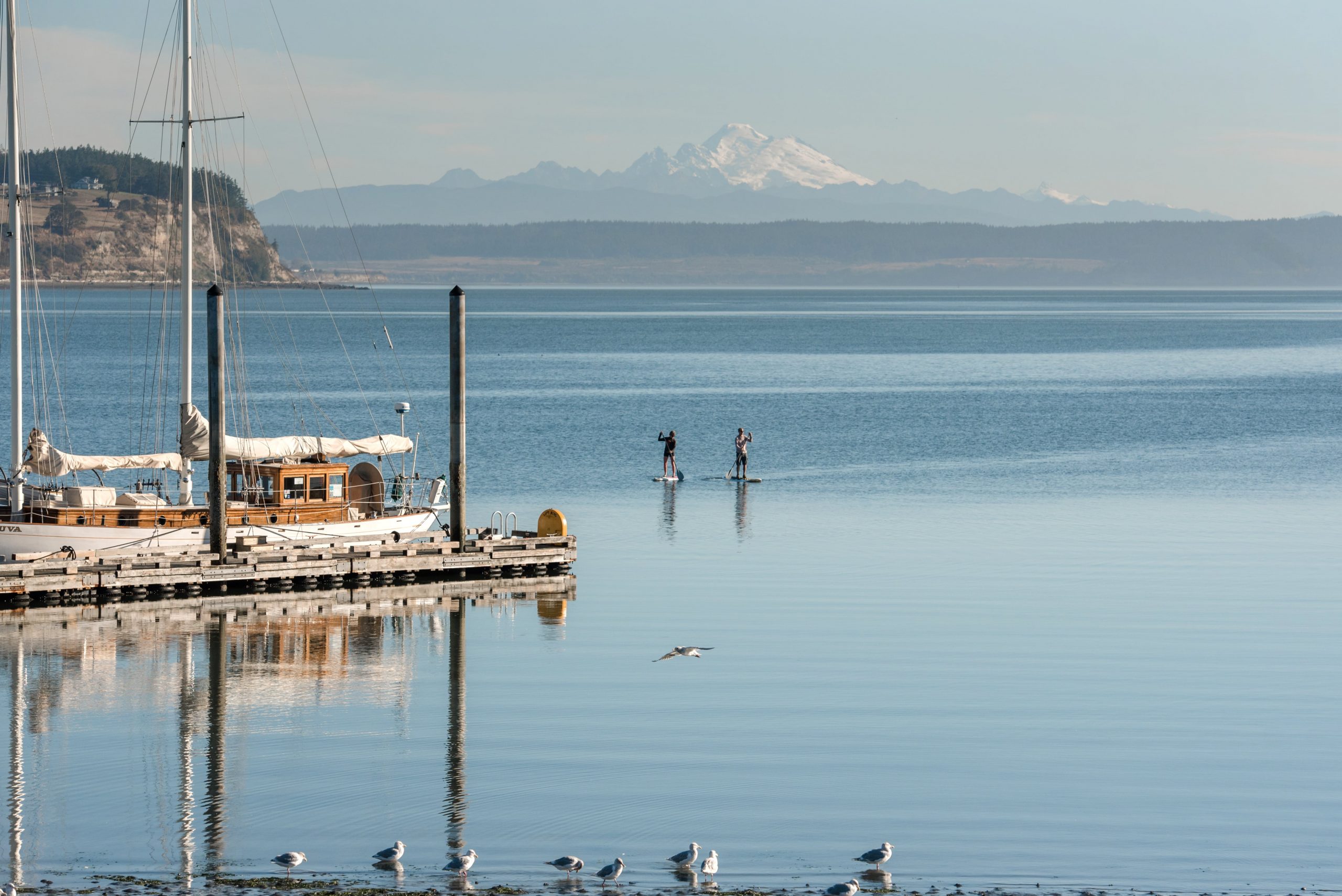
Whidbey Island straddles the 47 to 48th parallel. This means the summer brings gluttony of sun, so much that black-out shades are a staple in Pacific Northwest homes. Although, this abundance of light is sometimes hard to remember during the darkest days of winter when the sun only passes by at a shallow 45 degrees above the horizon in the South and keeps us in darkness 15.5 hours out of 24 on our darkest winter day. These extremes are affected even more depending on where we live, what direction our property is “facing”, and how much tree coverage we have. We consider the direction property is facing as the direction of the major view or placement the outdoor area is oriented towards. So if you enter a home on its east side but the outdoor area is on the west side with a deck/patio and view we would call this a west-facing home.
In the following sections, we will discuss the pros and cons of the four major directions that homes face or are oriented towards on Whidbey. Our focus will be on water view properties but the info will work for some territorial or non-view homes as well. We hope you find this helpful and that you will take this into consideration when buying or selling your home on Whidbey Island.
North Facing
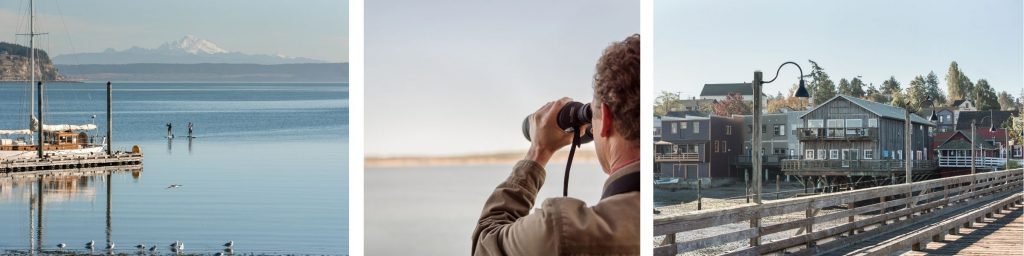
This is likely the least sought-after direction for the sole reason that during the winter months there are often large sections of the North facing beaches that never see a ray of sun because of hill or tree coverage. There are only a few sections of shoreline that are facing the true North on Whidbey. Some of these are the charming Town of Coupeville and the City of Langley that no one can resist! There are some sections of shoreline east and west of Coupeville along Madrona Way and near Long Point that are mostly shaded in the winter but absolutely delightful in the summer.
There are numerous sand points on Whidbey with a north-facing side that get a lot of sun because they jut out in the water like Long Point, Snakelum Point, Harrington Lagoon, Whidbey Shores, and Sandy Point. Dugualla Heights is another kind of anomaly in that it gets more sun because it is not heavily treed, has an open bay, and flight line that gives it more exposure. These nuances are one of the many reasons it is helpful to have a hyper-local full-time Windermere broker to be your guide!
East Facing

Enjoy stunning views like these of boats in the cove when you live on Whidbey Island.
If you are a morning person and just relish a warm cup with a view of the sun rising over the mountains, water, or horizon then an East facing orientation is for you! You are in luck because Whidbey Island has a majority of East-facing shoreline and the hilly nature of the island offers a plethora of view opportunities for the Eastside. Many of such views include the Cascade Range and Mt. Baker to admire. They can really put on a show when it is clear. The only downside is that you lose the sun in the mid to late afternoon on Eastern shorelines.
The major benefit of living on the Eastside is that it is the more protected side of the island so there is not as much wind and wave action. Occasionally, an unusual day will occur when there is a wind howling out of the South where the fetch created across the long body of water in Saratoga Passage can really kick up some waves! But this can also make for some amazing photo opportunities.
Some of our favorite East facing areas/neighborhoods are Davis Landing, Scenic Heights, and Shangri-La Shores. Check them out here!
South Facing

Enjoy the sun on Whidbey Island.
South-facing properties are a pretty rare find on Whidbey Island because of Whidbey Islands’ long north/south orientation. If you are a person that lives for the sun you will want to seek out one of these South-facing properties. Unlike the North facing properties who often get no sun during the Winter, these South facing properties get every bit of light possible all year long even during the winter pouring into their South facing windows. In fact, because of the low angle of the sun in the winter, it can be more piercing than in the summer when it is placed directly overhead.
South-facing beaches tend to be the most sought after for wading, swimming, or just lounging on the shore because they are typically a lot warmer.
Penn Cove Road and Polnell shores not only enjoy South facing beaches but are also on the more protected East side of the Island. One of the warmest sandy public beaches can be found right at the end of Monroe Landing on the Northside of Penn Cove. If you are looking for the best sandy public beach that is South facing on the bottom half of the Island Double Bluff beach just cannot be beat AND you can bring your four-legged friend for an off-leash romp! Read more about it here.
Sunlight Beach and Shore Avenue in Freeland have some of the highest-priced homes on Whidbey because of these unique attributes. Except for the rocky beach and jet noise Keystone has exactly the same view aspect but for half the price.
West Facing
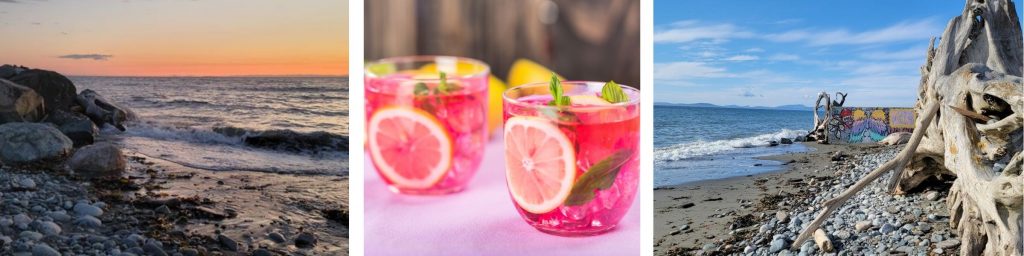
If stunning sunsets and enjoying the warmest part of the day on your property is what you are after then you should be looking for a West-facing view. Sipping an evening cocktail or cup of chamomile tea while watching the last rays of light dip over the horizon is just bliss for a lot of people which is why the West side of Whidbey has some of the highest-priced homes and sought after neighborhoods. Yes, the wind can be a little more fierce as it hits the West side of Whidbey dead on when it howls through the Strait of Juan De Fuca in the winter but this can also be a highlight as you watch a winter storm take shape from the comfort of your couch. If you are on the edge of one of our high sandy bluffs on the West side of the Island you should also expect to deal with blown sand, saltwater, and the corrosion that comes with it. Some West-facing homes operate more like a ship at sea than a stick-built home. The sunsets though… Definitely worth it if that’s your jam!
Some of our favorite West facing neighborhoods are Sierra and Ledgewood communities because the sloping topography allows a lot of homes to have stunning views without having to own waterfront property. The canal community of Lagoon Point is a unique West-facing community and of course, anything along West Beach Road is likely to have this coveted orientation.
